
Building Climate-Resilient Communities: Insights from Tamil Nadu’s Sustainable Cooling and Habitat Innovations
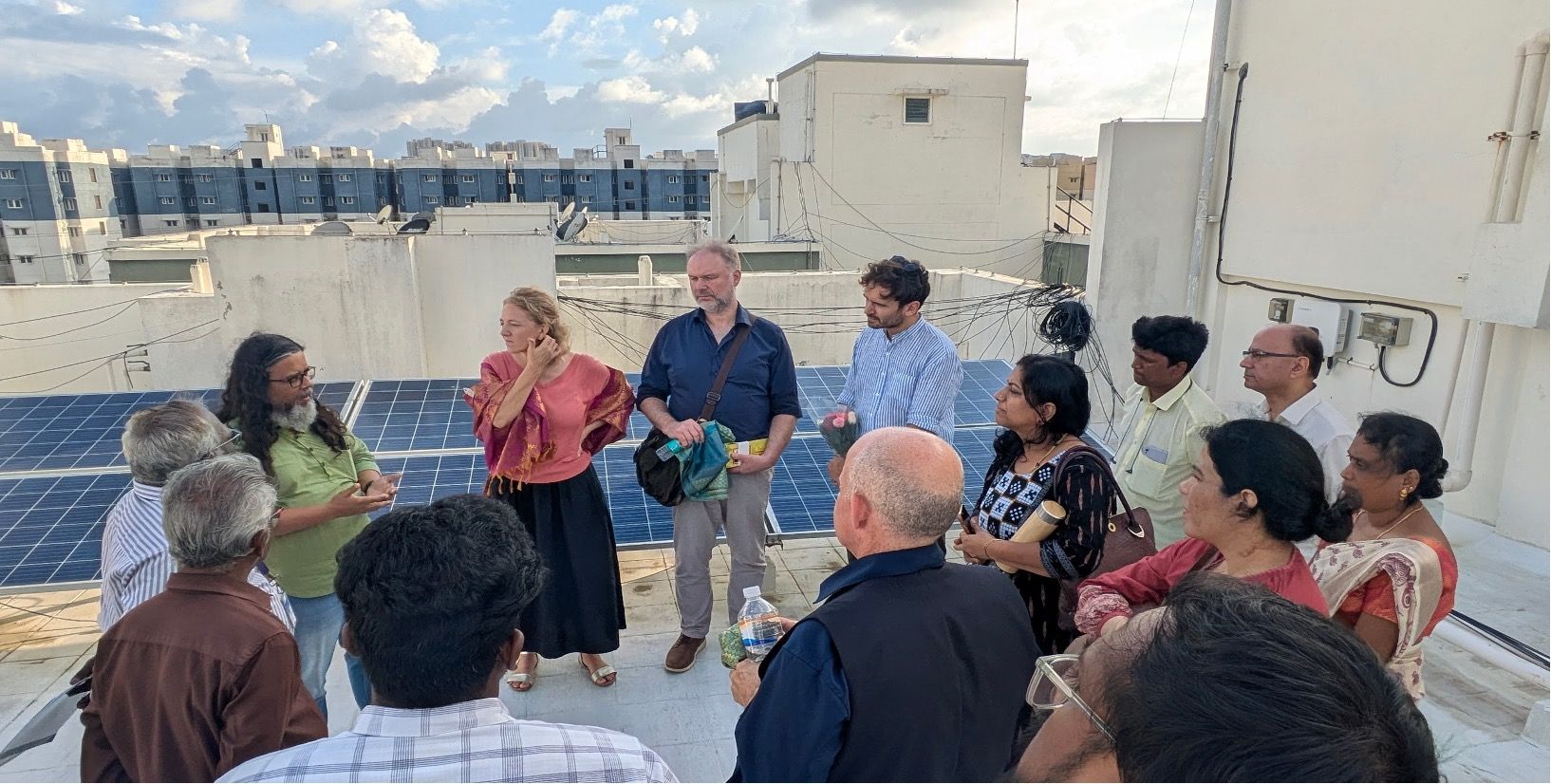
Tamil Nadu is rapidly emerging as a leader in addressing extreme heat and advancing climate-resilient development. As rising temperatures reshape daily life in India’s warm-humid regions, the state is working with technical institutions and global partners to embed passive cooling, low-carbon construction, and community-centric design into schools, housing, and urban development.
To build on these efforts, teams from UNEP Cool Coalition and Swiss Agency for Development and Cooperation (SDC) funded BeCool Project spent two days in Chennai and Auroville from 23–24 November 2025, engaging with communities and technical experts to jointly explore how approaches to sustainable cooling can be strengthened and scaled.
Chennai: Demonstrating solutions in schools and affordable housing
Healthier learning environment – Ambattur Green School
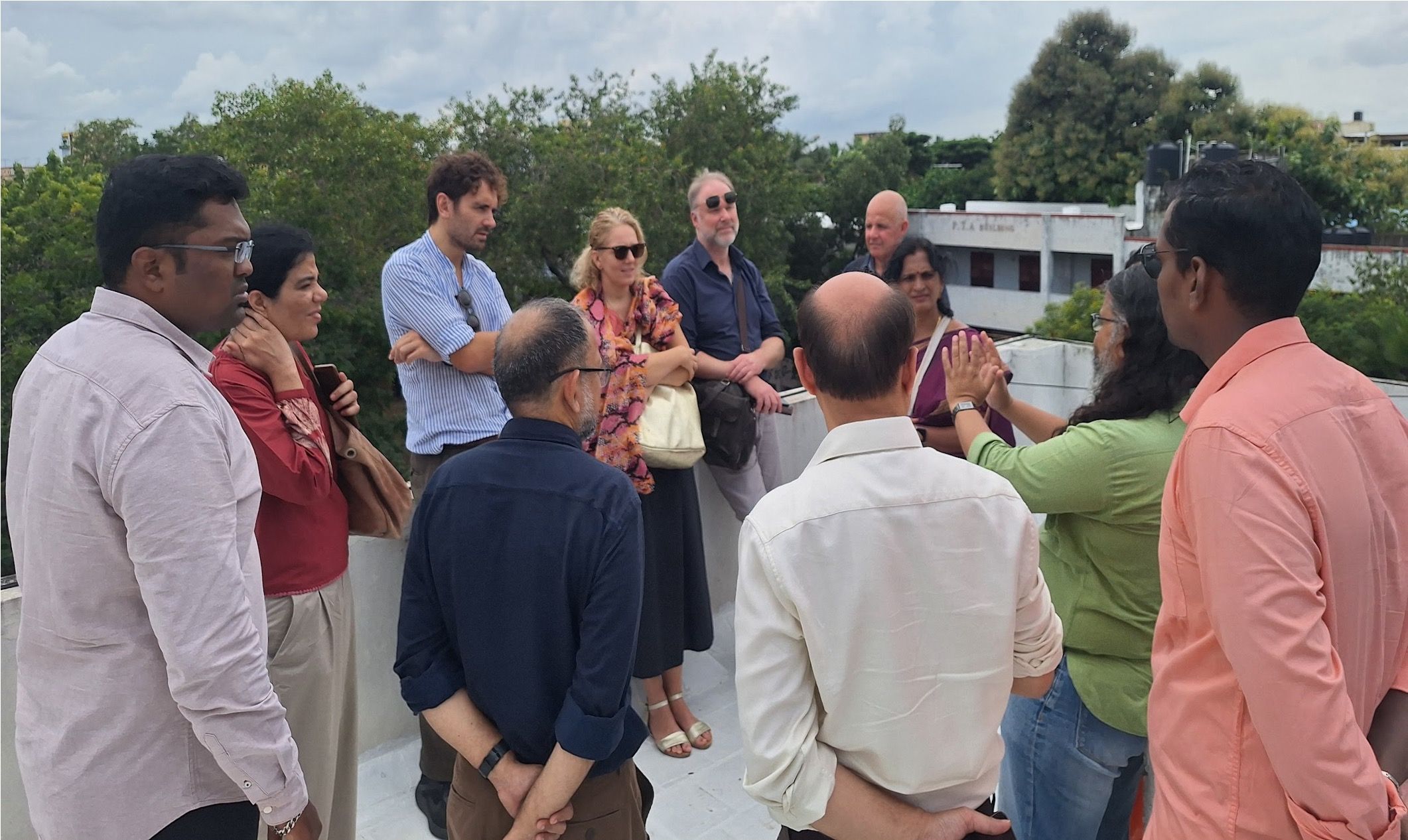
The UNEP-SDC delegation visited the Perunthalaivar Kamarajar Girls Higher Secondary School in Ambattur, one of the key pilot sites under the BeCool project in partnership with the Government of Tamil Nadu. The cool roof pilot implementation under the project has already begun improving conditions, with early feedback by teachers and students pointing to a noticeable reduction in indoor discomfort.
The pilot’s early results have opened the door to explore a statewide expansion covering 300 schools that will collectively benefit more than 150,000 students. The delegation also explored opportunities to integrate additional Passive Cooling Strategies (PCS) such as shading, ventilation enhancements, site vegetation and solar integration.
Addressing heat stress in affordable housing projects – Perumbakkam
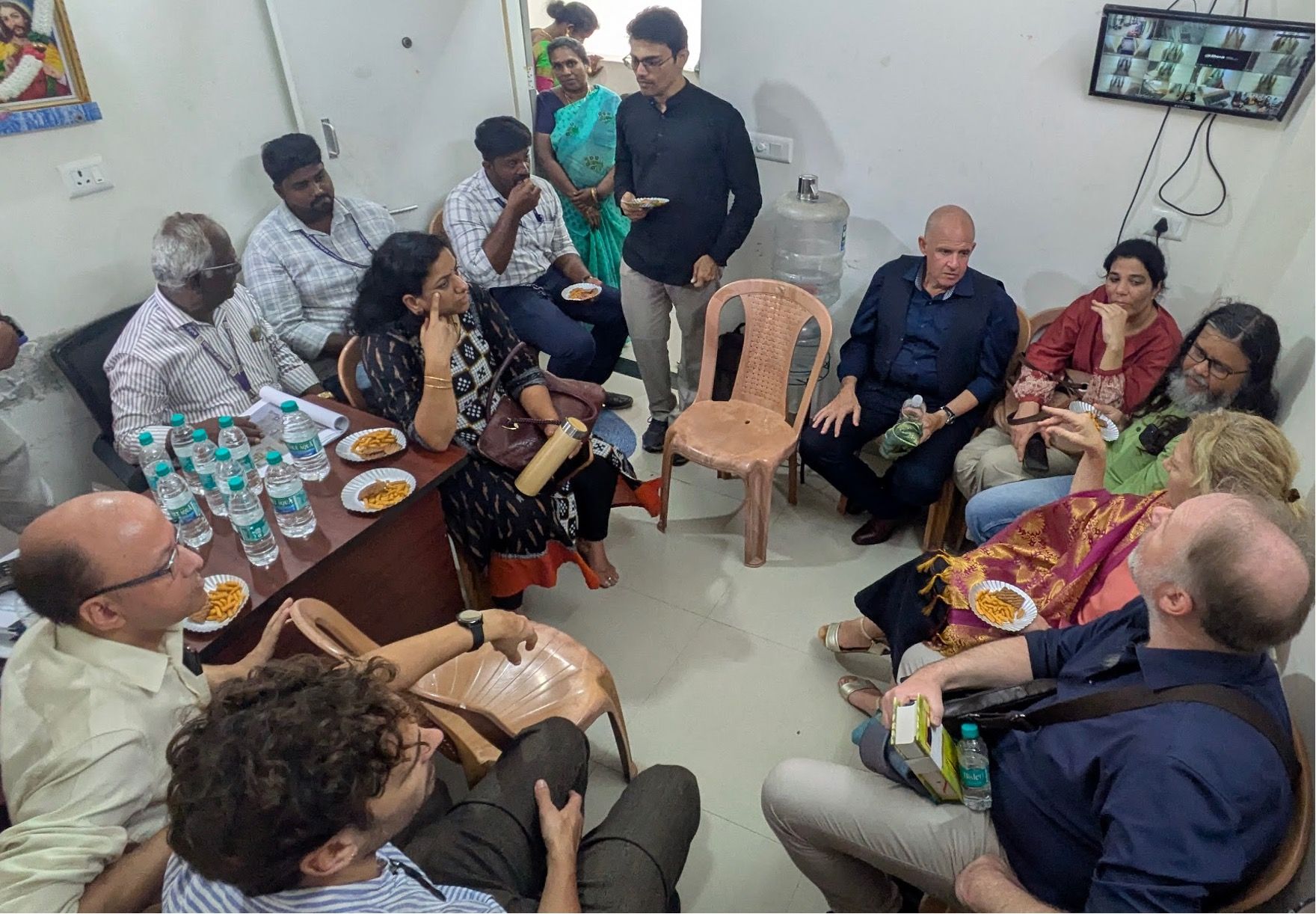
The BeCool affordable housing pilot in Perumbakkam offered insights into heat challenges faced by families living in multi-storey affordable housing. The visit highlighted both the urgency and the feasibility of integrating passive cooling strategies in affordable housing.
In collaboration with Tamil Nadu Urban Habitat Development Board (TNUHDB), the initiative is strengthening efforts to make affordable housing more climate-resilient and energy-efficient. Going forward, a wider set of passive cooling strategies for both new constructions and retrofit options will be implemented across Tamil Nadu in partnership with TNUHDB.
The visit reinforced a shared commitment to reduce heat stress for vulnerable communities without increasing energy demand or household costs.
Auroville: Learning from low-carbon materials and integrated habitat models
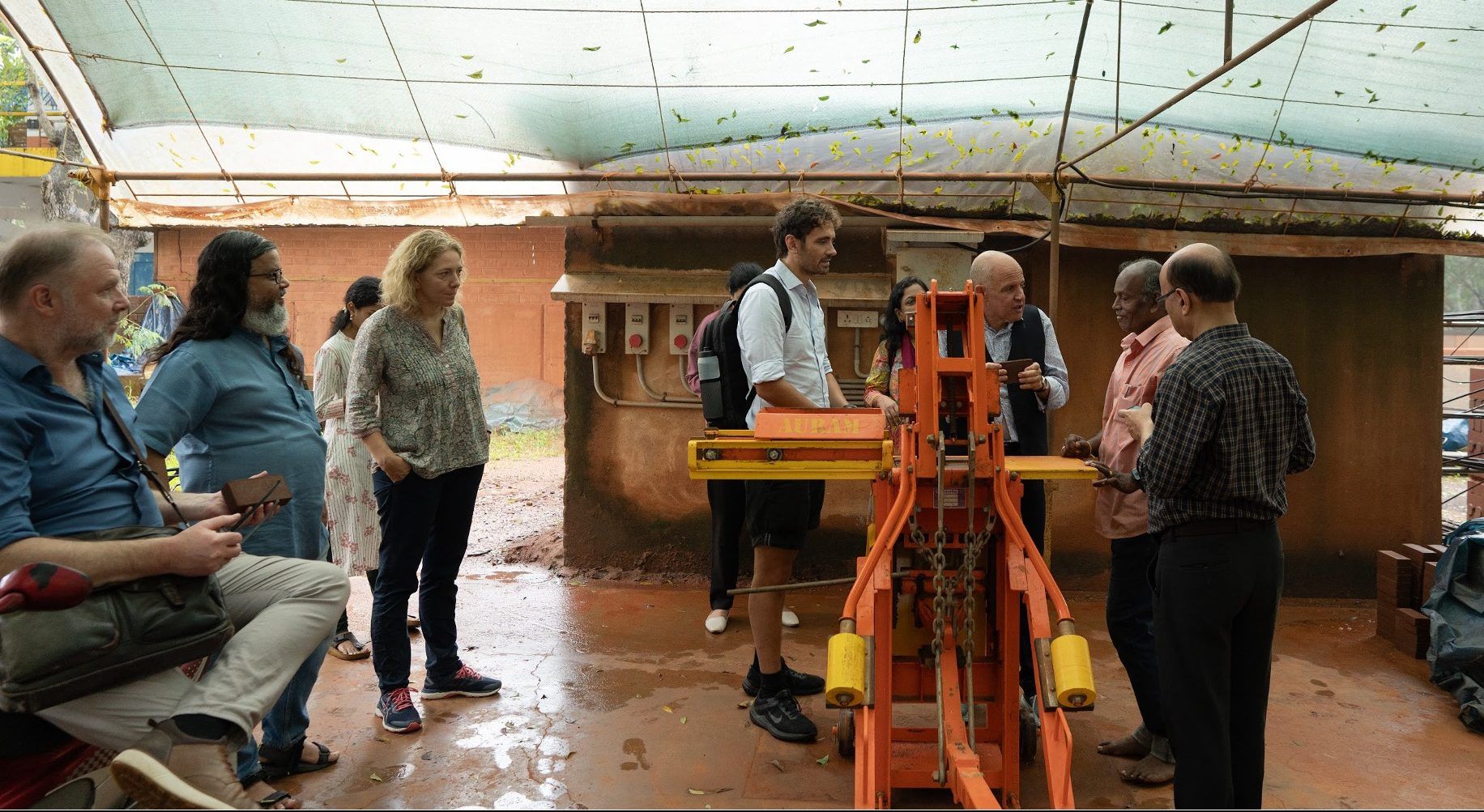
The second day shifted attention from urban retrofits to material innovation, construction systems, and holistic habitat design. The delegation explored the potential of compressed stabilised earth blocks (CSEB) to serve as a low-carbon, thermally efficient alternative to conventional materials. They were also presented an integrated demonstration of sustainable urban development using passive design, local materials, and circular construction principles.
These discussions opened pathways to explore collaboration on integrating earth-based materials and passive cooling strategies into affordable housing typologies.
Insights from the ground
Across the two days, conversations with school administrators, residents, architects, and local partners surfaced consistent themes:
- Passive cooling can deliver significant comfort gains at low cost in both educational and residential buildings.
- Dense urban housing requires integrated solutions that balance material choices with ventilation, shading, and microclimate interventions.
- Earth-based and recycled materials offer strong potential for low-carbon cooling but require policy support and market development.
- Collaboration between state agencies, technical experts, and local communities is essential to ensuring solutions are practical, equitable, and scalable.
Looking ahead
Tamil Nadu’s innovations in passive cooling, climate-responsive design, and low-carbon materials offer a replicable model for other heat-stressed regions. The BeCool project will continue to support the state in scaling passive cooling in schools, affordable housing and other public infrastructure, strengthening technical capacity, and integrating climate-adaptive principles into construction guidelines and policy frameworks.
The insights from Chennai and Auroville highlighted the central role of sustainable cooling in shaping resilient, people-centred urban environments. With ongoing collaboration and strong leadership, Tamil Nadu is moving toward mainstreaming these approaches statewide.