Heat is now one of the deadliest consequences of climate change, with global heat-related deaths estimated at 546,000 per year and rising 63% since the 1990s. Yet this burden falls unevenly: it is greatest, and least well understood, across sub-Saharan Africa, South Asia, Southeast Asia, and Latin America and the Caribbean, where epidemiological methods built for temperate, high-income settings do not transfer easily and the true scale of heat vulnerability remains largely invisible. Africa, for instance, contributed just 3 of 237 studies in a recent global scoping review of heat-health research, despite carrying some of the most severe projected increases in heat mortality this century.
SEforALL's Chilling Prospects analysis estimates that over one billion of the world's rural and urban poor face high risk of lacking access to the cooling needed for heat resilience, leaving them exposed not only to heat illness and death but to lost income, spoiled food, and disrupted access to medicines and vaccines.
Closing this gap requires a hierarchy of complementary responses, from passive and nature-based measures that reduce heat exposure and cooling demand, to low-energy solutions such as efficient fans, and efficient mechanical cooling where needed. The appropriate mix will depend on climate, context, affordability and the thermal comfort needs of different communities.
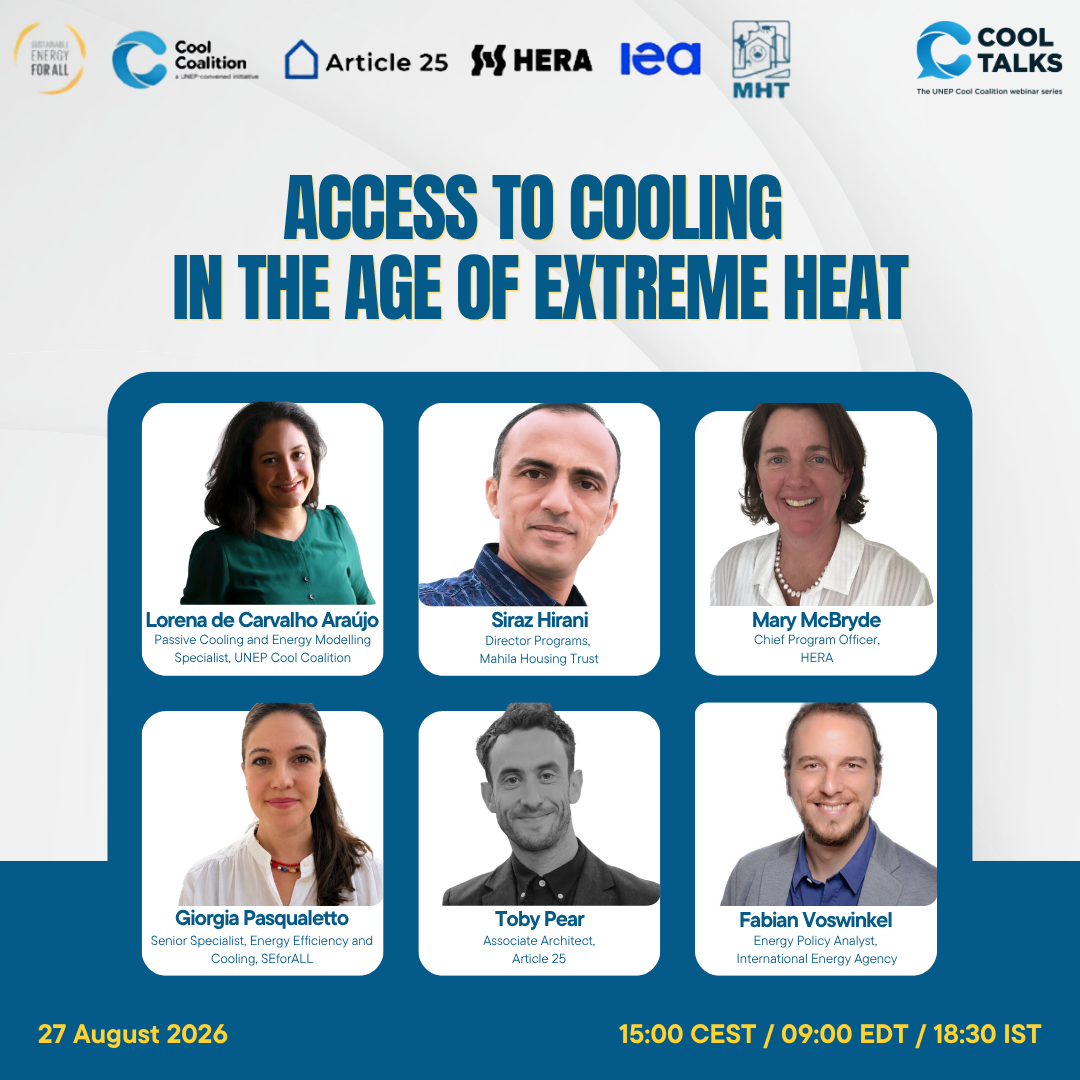
This webinar, hosted under the Cool Coalition's Cool Talks series, brings together practitioners and technical experts to examine both the human cost of extreme heat and what an equity-first approach to cooling access could look like in practice.