Sustainable Cooling
Cooling demand is accelerating driven by extreme and rising heat, population growth, increasing incomes, and higher global temperatures. While essential for development, this growing demand risks driving further climate change, creating a feedback loop of rising temperatures and emissions.
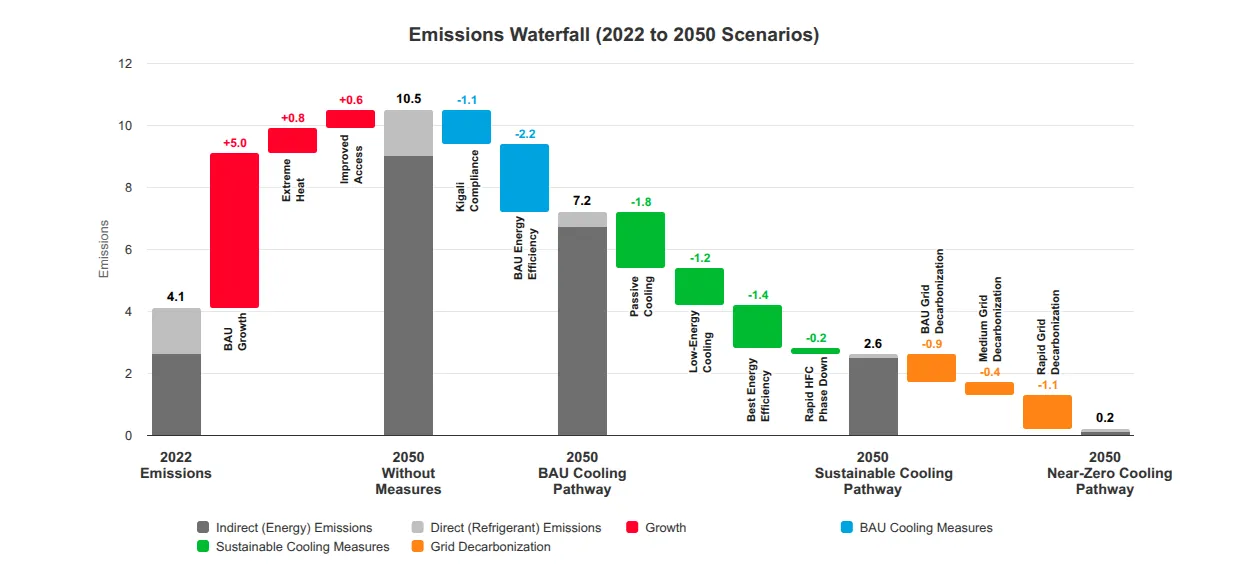
To break this cycle, the UNEP Cool Coalition has identified three priority actions: passive cooling, higher energy efficiency standards, and a faster phase-down of climate-warming refrigerants. Getting cooling right could reduce projected 2050 cooling-related emissions by over 60 per cent (3.8 billion tons of CO₂e), expand access to life-saving cooling, relieve strain on power grids, and save trillions by mid-century.
Specifically, a 60 per cent reduction in cooling emissions would:
- Enable 3.5 billion more people to benefit from cooling by 2050.
- Cut electricity bills by 1 trillion USD in 2050 and US$17 trillion cumulatively (2022–2050).
- Reduce peak power needs by 1.5–2 TW (nearly double the European Union’s generation capacity today).
- Avoid 4 to 5 trillion USD in power infrastructure investment.
- With rapid grid decarbonization, total emissions cuts could reach 96 per cent.
- G20 countries account for 73 per cent of this reduction potential; G7 countries for 11 per cent.
Distribution of relevant national policies to lower cooling emissions across countries
Key Policies
0
1
2
3
4
I. Passive cooling strategies
Passive cooling, such as insulation, shading, natural ventilation, and reflective surfaces, can dramatically reduce cooling loads in buildings and cold chains. Mandating insulation and display case doors in food retail also reduces cold chain loads. These measures can be driven through building energy codes and urban design. Collectively, they could reduce 2050 cooling demand by 24 per cent, save 3 trillion USD in capital costs, and cut 1.3 billion tons of CO₂e.
II. Higher energy efficiency standards
Higher energy efficiency standards and labelling could triple global cooling efficiency by 2050, delivering 30 per cent of modelled energy savings, lowering bills, and strengthening cold chain viability.
Key policies include:
- Updated Minimum Energy Performance Standards (MEPS)
- Product labelling to guide consumers
- Financial incentives for efficient products
- MEPS integrated with refrigerant criteria and building codes
Anti-dumping regulations to stop low-efficiency, high-GWP equipment in developing markets
III. Fast HFC Phase-Down
Most HFCs used in cooling are thousands of times more potent than CO₂. The Kigali Amendment commits countries to a phasedown, but emissions could be halved again by 2050 with faster uptake of low-GWP tech, stronger refrigerant management, and national enforcement.
A joined-up approach is essential. Aligning policies across passive cooling, efficiency, and refrigerant phase-down will maximize impact and speed the transition. Governments should:
- Strengthen regulations and enforcement.
- Integrate cooling into climate strategies, NCAPs, net-zero roadmaps, and building codes.
While 80% of UN Member States have at least one cooling-related regulation, most are incomplete, siloed, or in pilot phase:
- Only 53 countries (27%) have all three: MEPS, building codes, and Kigali ratification.
- Just 35 countries (18%) have National Cooling Action Plans or cooling in climate plans.
Global Cooling Pledge Signatories
Key Policies
0
25%
50%
75%
100%
At the 2023 United Nations Climate Change Conference (COP28), the UNEP Cool Coalition launched the Global Cooling Pledge, currently co-chaired by the United Arab Emirates (COP28) and Brazil (COP30) Presidencies. The Pledge represents the world’s first collective commitment to reducing cooling-related emissions by more than 60% by 2050, while also expanding equitable access to sustainable cooling.
With over 70 country signatories and 80 non-state supporters, the Pledge outlines 14 priority actions, including:
- Development and implementation of National Cooling Action Plans (NCAPs)
- Expansion of passive cooling measures, such as nature-based solutions and improved building design
- Introduction of Minimum Energy Performance Standards (MEPS)
- Scaling of cooling innovations
- Phasing down of high-GWP refrigerants in line with the Kigali Amendment
These actions are grounded in the science of the Global Cooling Watch, UNEP’s biennial roadmap for achieving near-zero cooling emissions.
So far, Pledge Signatories have made measurable progress:
- 37 countries are integrating cooling into their Nationally Determined Contributions (NDCs)
- 42 countries are developing or implementing NCAPs
- 49 countries have adopted MEPS for efficient cooling appliances
The Global Cooling Pledge is an open call to countries and partners to raise ambition and accelerate implementation across the cooling value chain. By joining, stakeholders signal their commitment to tackling one of the fastest-growing sources of greenhouse gas emissions, while improving resilience, health, and economic opportunity for the world’s most vulnerable communities.
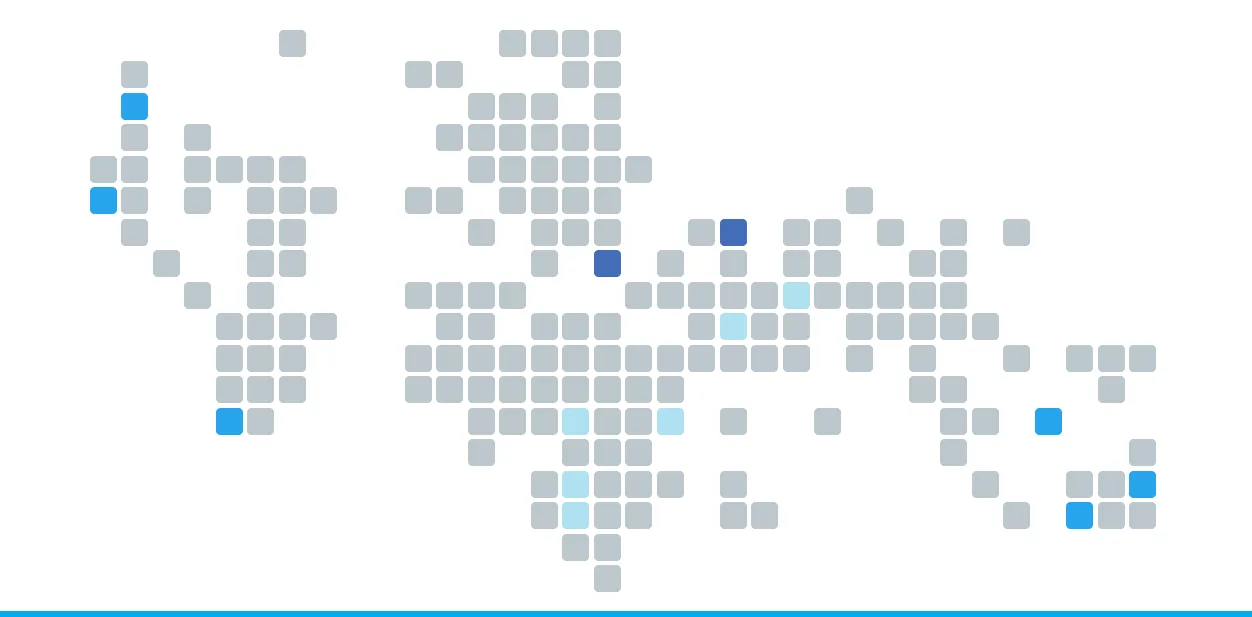
This map highlights the growing coalition of signatory countries and the steps they are taking. Explore the data and learn how your country or organization can join the global effort to deliver sustainable cooling for all.
DATA AND NOTES
Data for the adaptation finance needs of developing countries comes from UNEP’s Adaptation Gap Report 2023.
Data for the status of National Adaptation Plans comes from the NAP Trends website produced by the NAP Global Network. Developing countries are encouraged to submit their National Adaptation Plans to the UNFCCC NAP Portal. This style of map (square tiles) was deliberately chosen so that each country would be represented equally. The grey tiles represent developed countries, who only began submitting their National Adaptation Plans to UNFCCC in 2023. See here for those that are available.
A UNEP publication assesses the lessons learned from National Adaptation Plans around the world, drawing on five assessment criteria – comprehensiveness, inclusiveness, potential for implementation, integration, and monitoring & evaluation. Read the publication here.
Learn more about National Adaptation Plans here.
Learn more about UNEP’s work in climate adaptation here.
The boundaries and names shown, and the designations used on these maps, do not imply official endorsement or acceptance by the United Nations.
Image
GHG emissions are choking our world, mitigation opportunities exist but GHG emissions continue to rise
Image

Individual carbon footprint varies a lot and it falls along wealth lines
Image
Progress is being made but it is insufficient and all countries need to step up
State of the climate
The world is in a climate emergency – “a code red for humanity” according to the UN Secretary-General. The concentration of greenhouse gas (GHG) emissions in the atmosphere is wreaking havoc across the world and threatening lives, economies, health and food.
SVG

What’s happening
The concentration of greenhouse gases (GHG) in the atmosphere causes global temperatures to rise with a host of impacts and catastrophic consequences. At the moment the world is heading for a rise in excess of 3°C this century.
SVG
