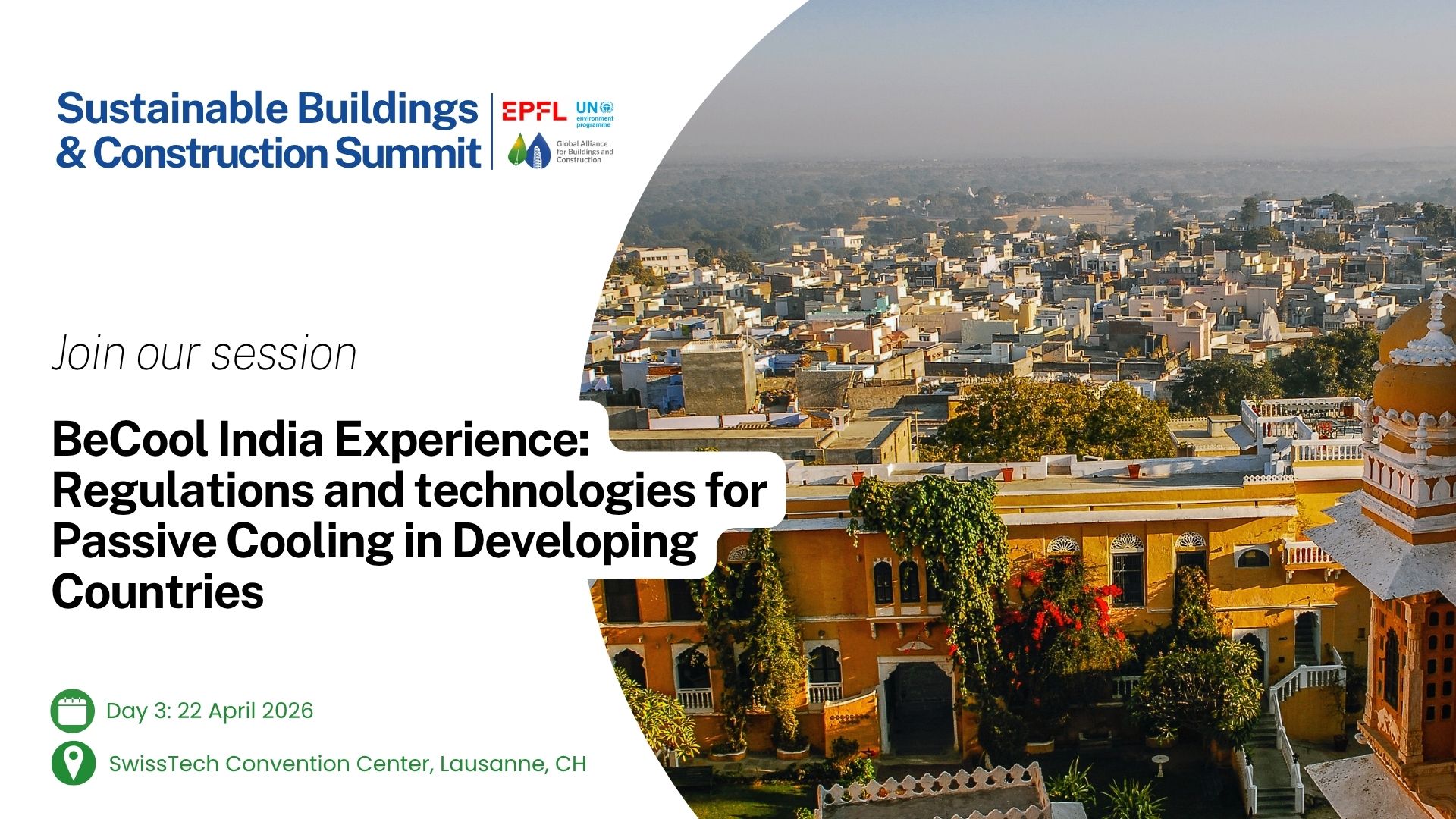
Extreme heat is rapidly becoming one of the most pressing challenges for the built environment, with growing impacts on health, productivity, energy systems, and urban livability. As temperatures rise and cities expand, demand for indoor cooling is increasing sharply, yet conventional air conditioning remains unaffordable for millions and will likely remain out of reach for many households for years to come.
Passive cooling provides a cost-effective and scalable foundation for addressing this challenge. By integrating climate-responsive design, materials and urban planning, buildings and neighborhoods can maintain lower indoor and ambient temperatures while reducing dependence on mechanical cooling, particularly critical for low-income and vulnerable communities.
The United Nations Environment Programme (UNEP) - Swiss Agency for Development and Cooperation (SDC) BeCool India programme was established to accelerate the mainstreaming of passive cooling across India’s built environment and make cooling more affordable, sustainable and resilient. Working with national institutions and state governments including Delhi, Maharashtra, Odisha, Tamil Nadu and Uttar Pradesh, the programme advances policy reform, financing approaches, market development and technical capacity to enable large-scale adoption for passively cooled buildings and cities.
This Sustainable Buildings and Construction Summit 2026 session will present actionable insights and implementation lessons from the BeCool India programme, with a focus on bridging policy ambition and on-ground delivery.