Cold chains are temperature-controlled logistics systems for perishable goods, which are critical to global food security, public health, and climate resilience in a rapidly warming world. Yet, their deployment remains deeply uneven, their emissions largely untracked, and their vulnerabilities to extreme heat increasingly exposed.
According to the IFC and UNEP Cool Coalition joint report, Cooler Finance: Mobilizing Investment for the Developing World’s Sustainable Cooling Needs, every year inadequate cold chains result in the loss of over 12 per cent of total food production, with devastating consequences for nutrition and rural livelihoods. In health systems, gaps in cold chain coverage compromise vaccine delivery and medical preparedness, particularly in heat-prone regions.
Climate change is compounding these risks. As highlighted in UNEP’s Global Cooling Watch 2023, cooling demand is rising sharply, but emissions from conventional systems are escalating, particularly in the cold chain sector, which is among the least regulated and most energy-intensive. Without targeted action, cold chains could become a significant and growing source of greenhouse gas emissions.
On the other hand, sustainable cold chain solutions powered by renewables, integrated into local systems, and designed with equity in mind, can reduce food loss, safeguard public health, and support countries’ climate and development goals. Strategic investment and collaboration across sectors are needed to unlock their full potential.
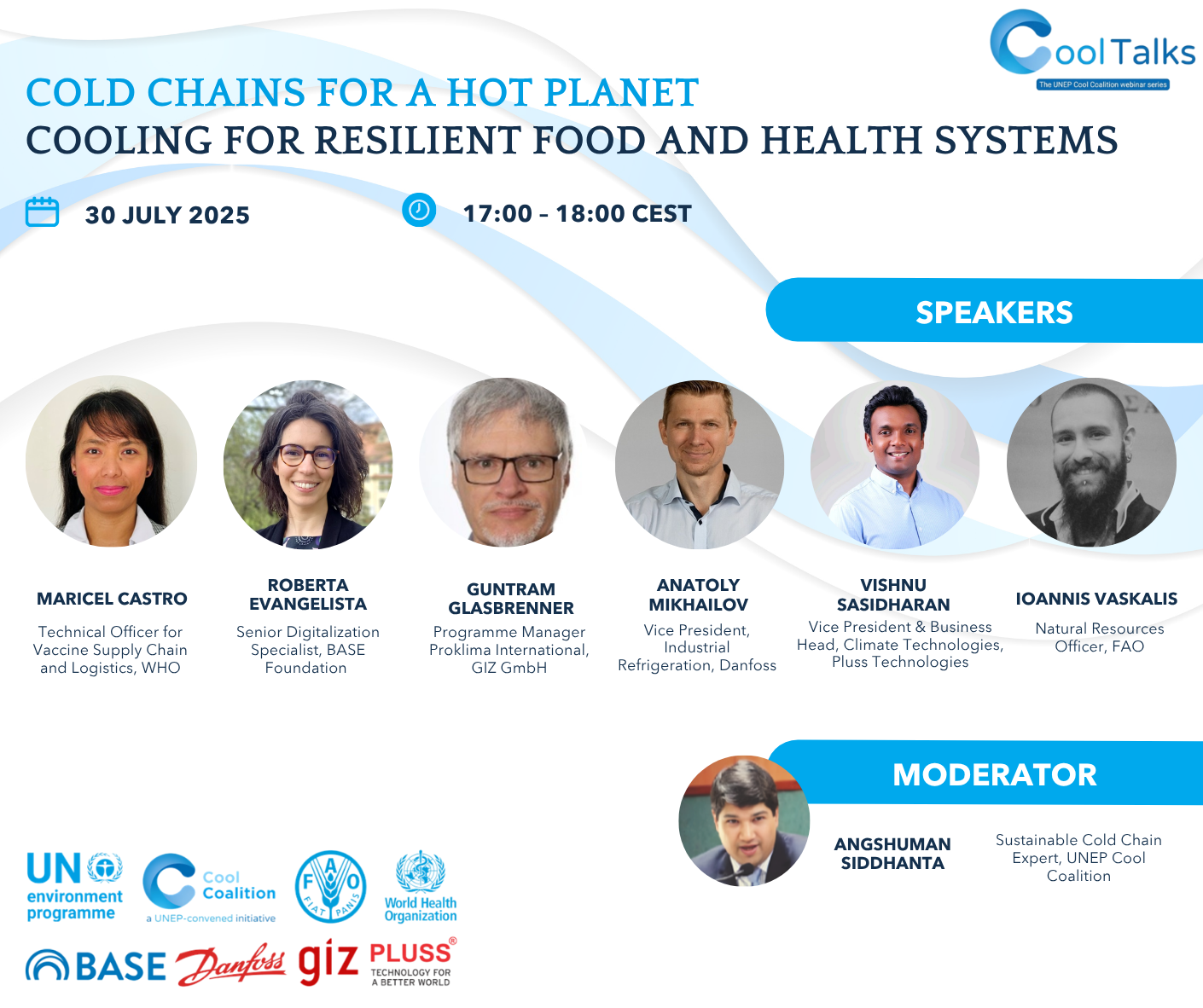
Held on the sidelines of the 2nd UN Food Systems Summit +4 Stocktaking Moment, this event explored how countries and industry leaders are deploying sustainable cold chains to strengthen resilience, cut emissions, and protect lives. It also spotlighted opportunities for collaboration and investment at the intersection of cooling, health, food, and climate goals.