Rising global temperatures and more frequent extreme heat and humidity events are intensifying heat stress, especially in the Global South, where infrastructure and economic limitations heighten vulnerability. Urbanization is compounding the issue, with cities experiencing significantly higher temperatures due to the Urban Heat Island effect. This is driving a surge in cooling demand, yet current technologies are energy-intensive and contribute to climate change, creating a harmful feedback loop. To address this, scalable, energy-efficient cooling solutions—such as cool roofs, high-efficiency fans, and super-efficient air conditioners—offer immediate and long-term benefits.
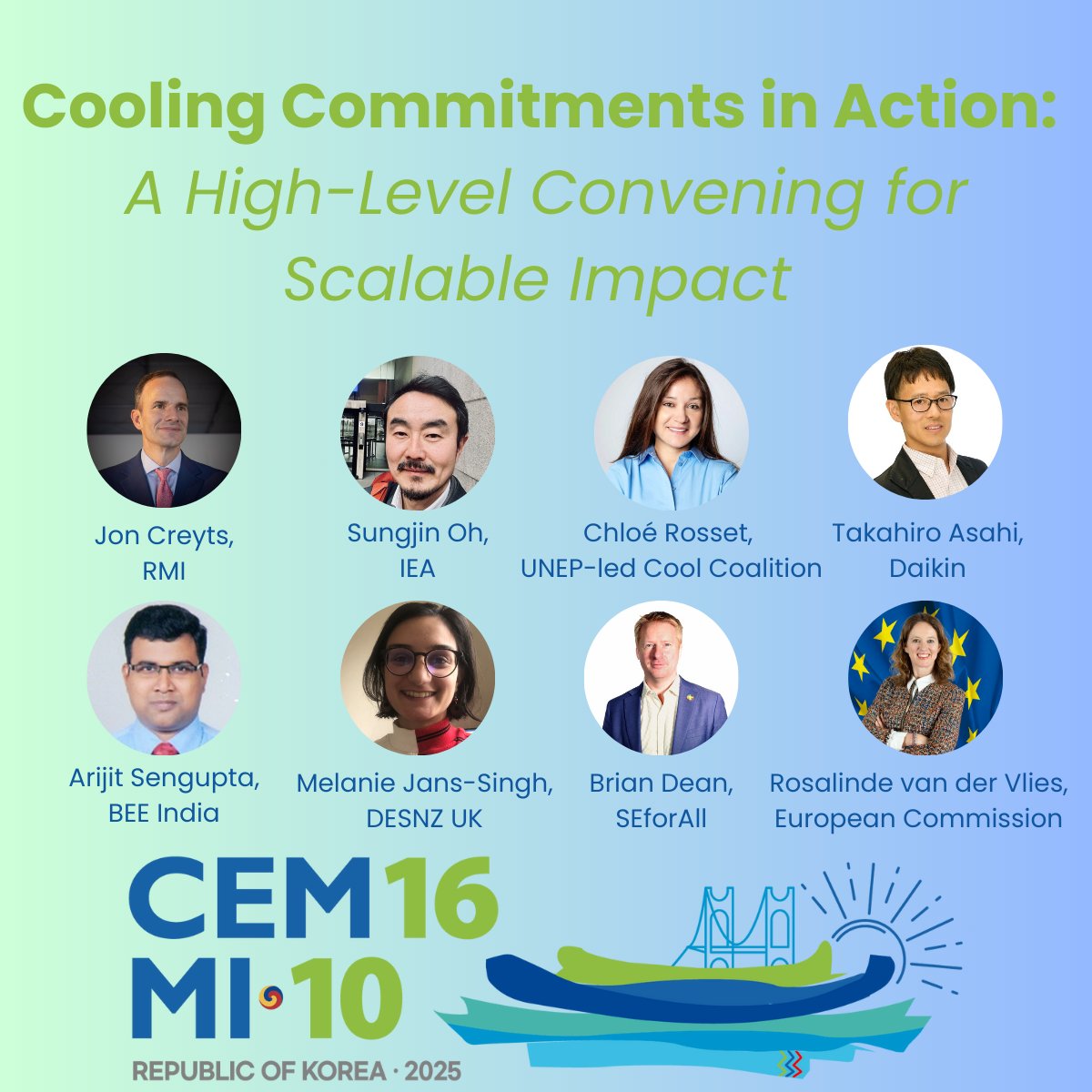
In response, the Rocky Mountain Institute (RMI), in collaboration with the CEM Super-Efficient Equipment and Appliance Deployment (SEAD), the International Energy Agency (IEA), and the UNEP Cool Coalition, is hosting a high-level event at the 16th Clean Energy Ministerial to operationalize global cooling commitments. The event will unite policymakers, industry leaders, and financers to align strategies, share best practices, and explore innovative market mechanisms. A key focus will be overcoming affordability barriers to ensure equitable access to sustainable cooling. By fostering collaboration and enabling implementation, the event aims to transform high level plans into impactful action that supports climate goals and protects vulnerable communities.