In a warming world, cooling is increasingly a resource-systems challenge, with direct implications for water security, food systems resilience, public health and infrastructure planning.
As temperatures rise, cooling demand is expanding across sectors that are critical to development and climate adaptation. Agricultural cold chains are needed to reduce post-harvest losses, protect farmer incomes, preserve nutritional value and improve food system resilience. Buildings, health facilities, schools and workplaces require cooling to protect people during extreme heat. Digital infrastructure and data centres also depend on thermal management systems that can place additional pressure on local water and energy resources.
These demands are converging in regions where water stress, grid constraints, rapid urbanisation and climate vulnerability already overlap. Cooling can therefore no longer be assessed only through energy efficiency or refrigerant transition. It must also be considered in relation to water withdrawals and consumption, local infrastructure capacity, competing sectoral demands, food loss, heat-health exposure and the distributional impacts of heat risk.
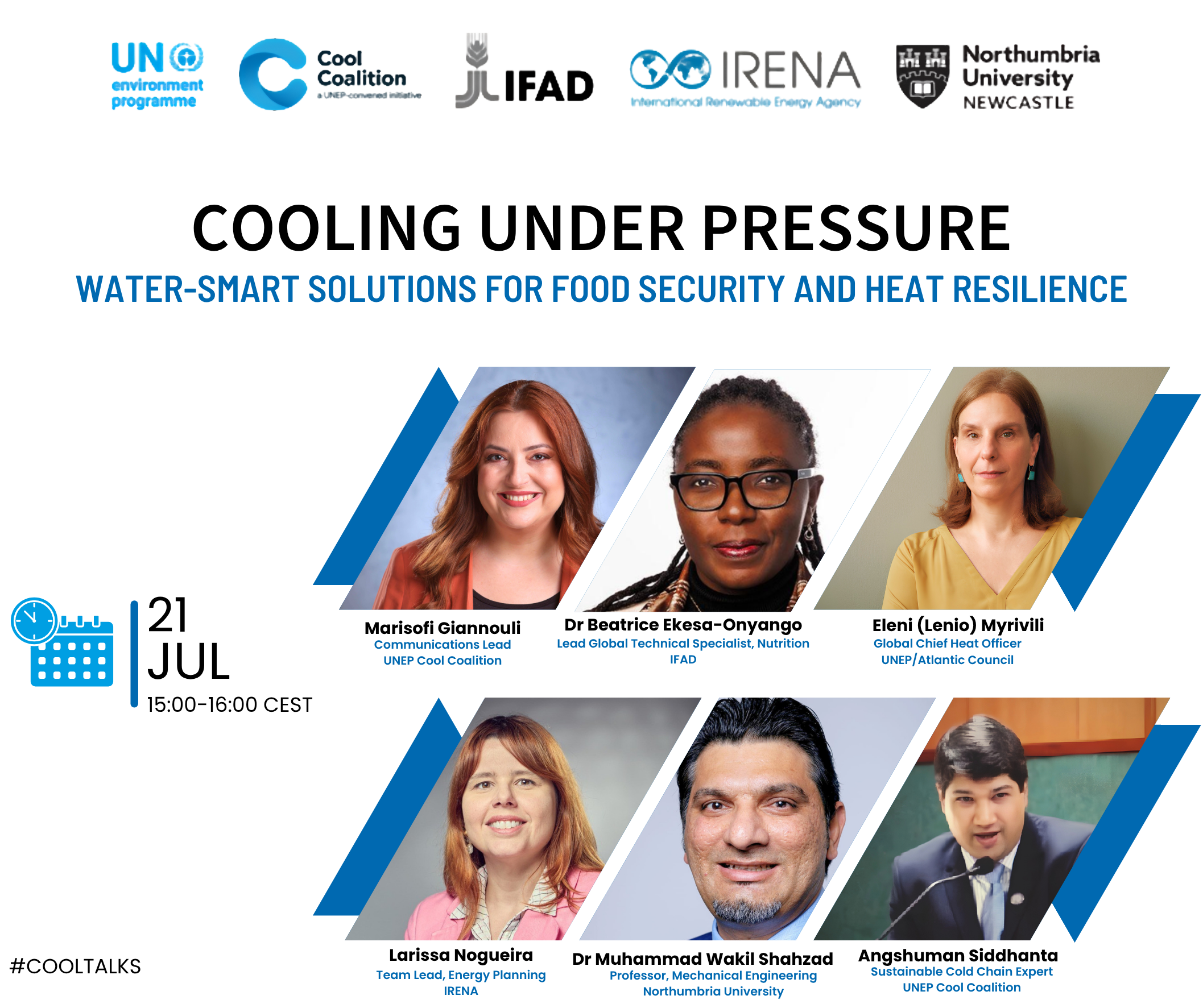
This Cool Talk will examine how water-smart, efficient and resilience-oriented cooling can help reduce food loss, protect health and manage resource pressures. It will bring together technical and policy perspectives from cooling, water, food systems and health to identify practical pathways for integrated planning and implementation.