Extreme heat is becoming one of the fastest-growing risks for cities worldwide. Heatwaves are among the deadliest climate-related hazards, causing hundreds of thousands of deaths annually, while the urban heat island effect can raise city temperatures by an additional 5 to 10°C. These impacts are often most severe in low-income communities living in informal or self-built housing, where poor construction quality, limited ventilation and lack of access to cooling can make indoor temperatures dangerous.
New research led by University of Michigan in Brazil, Colombia and Burkina Faso examines how passive cooling interventions can reduce indoor heat exposure in vulnerable settlements. Through participatory design and building-performance analysis, the research highlights practical measures such as shading, ventilation, reflective materials and improved envelopes that can enhance thermal comfort while avoiding additional energy demand. The findings offer important lessons for cities seeking equitable responses to rising heat.
At the same time, governments, cities and humanitarian partners are beginning to integrate heat resilience into wider planning, preparedness and investment strategies. This year’s Heat Action Day, led by the Red Cross Red Crescent Climate Centre, is raising awareness of extreme heat risks indoors and the simple measures that can protect people at home, at work and in care settings. The World Environment Day 50@50 activation is focused on city-level preparedness, bringing cities together to promote practical action that protects vulnerable people and communities from urban heat.
Building on this momentum, the Beat the Heat implementation drive, launched by the COP30 Brazilian Presidency and the United Nations Environment Programme (UNEP) Cool Coalition, supports local action through heat assessments, passive cooling, public procurement and subnational delivery, while the Nature for Cooling Challenge, supported by the Global Environment Facility, is helping cities develop funded nature-based cooling solutions through technical support, planning tools and investment preparation.
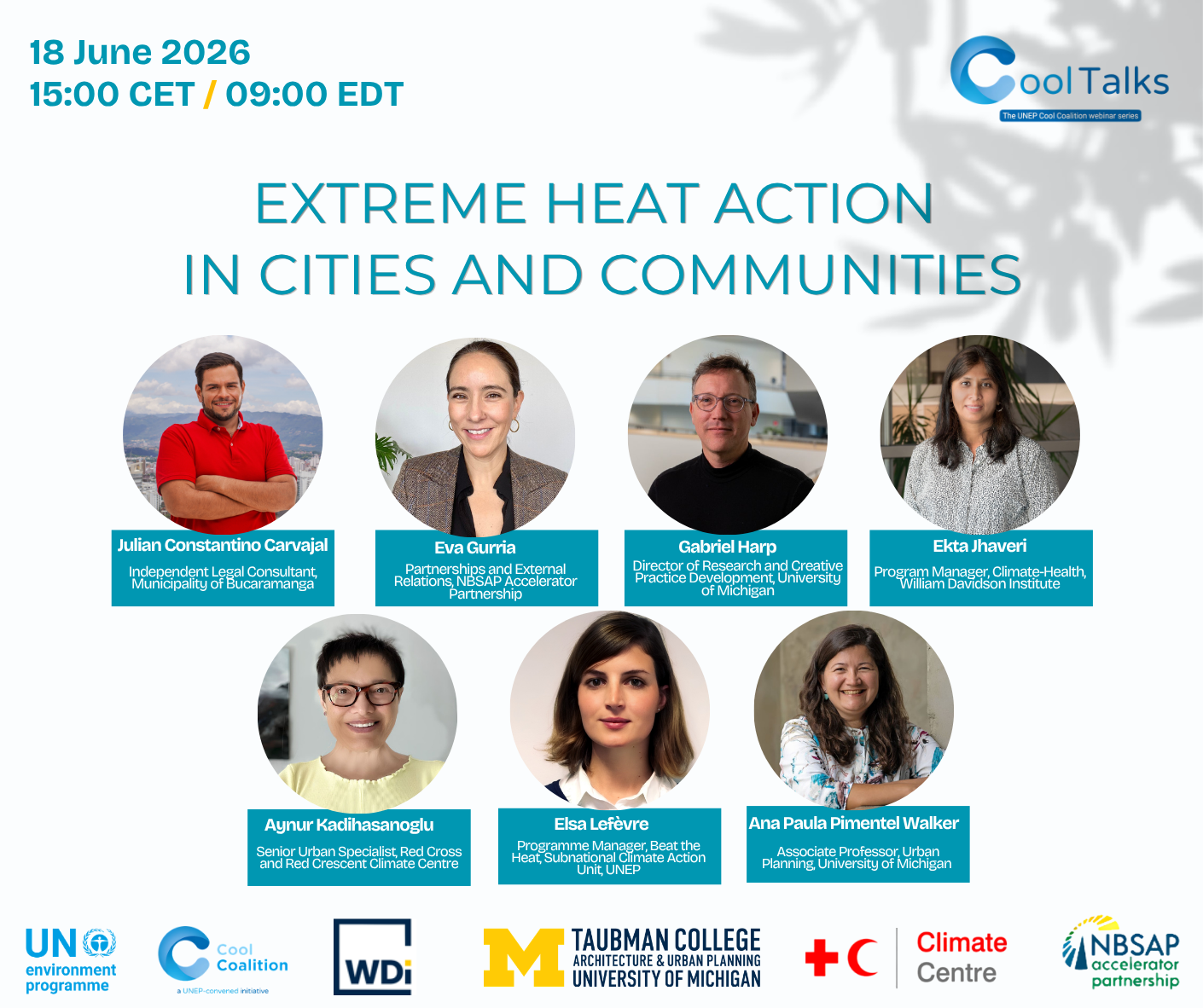
Together, these experiences show that effective heat action must connect evidence, policy and implementation across city systems, neighbourhoods and households. This Cool Talk will explore how research-informed solutions can help cities protect vulnerable communities and scale practical responses to extreme heat.