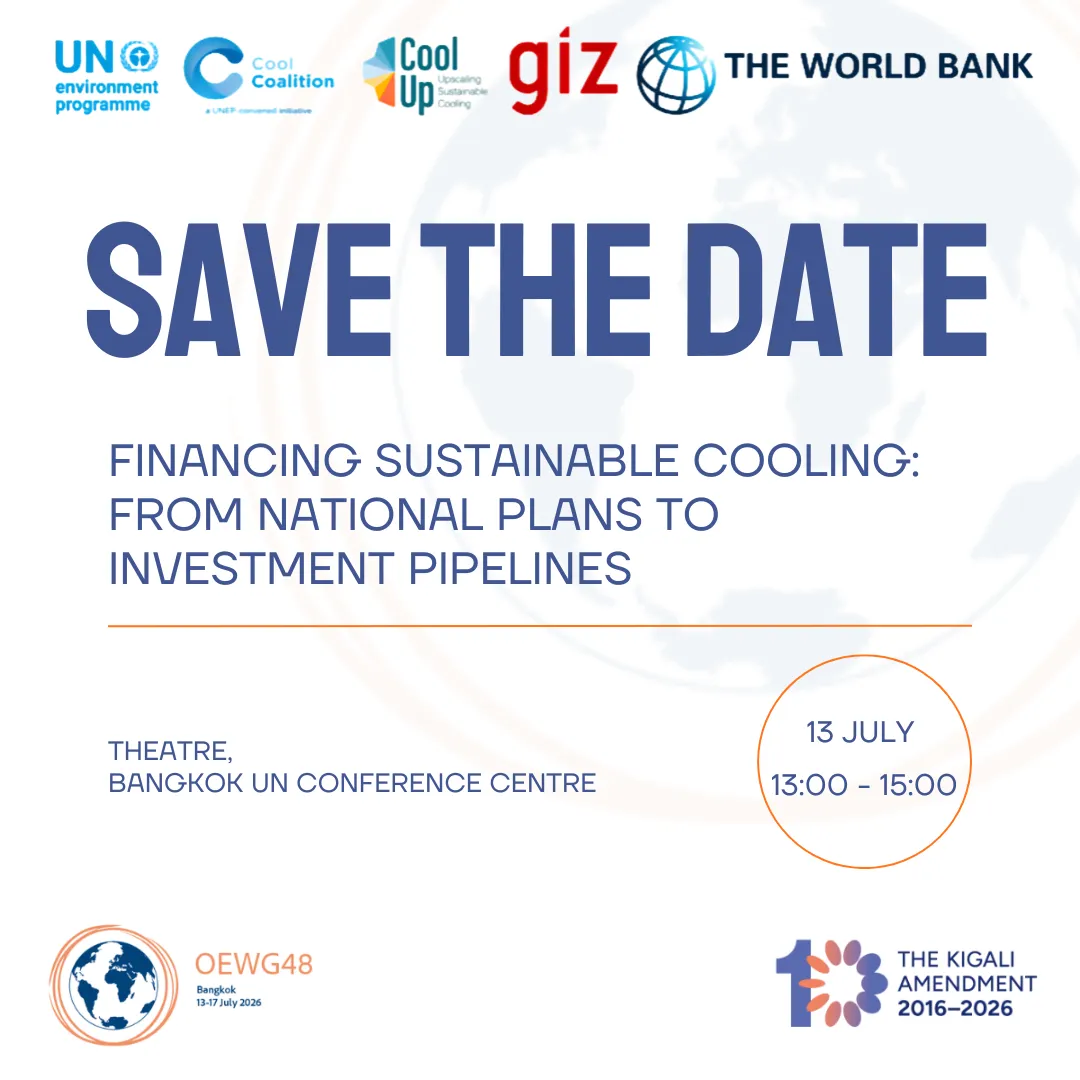
Cooling is now more visible in national planning than at any point in the past decade, but financing remains the central implementation bottleneck. UNEP’s Global Cooling Watch 2025 shows that 134 countries now include cooling in NDCs, NAPs, LT-LEDS, energy plans, or other national strategies, while 29 countries have set dedicated cooling emissions targets. The planning architecture is emerging. The challenge is turning it into investment pipelines.
This gap is becoming more costly. Under business as usual, cooling-related emissions would almost double over 2022 levels by 2050. At the same time, according to IFC-UNEP’s Cooler Finance, sustainable cooling in developing economies represents annual market demand of at least USD 600 billion. The clear implication is that financing decisions made in this decade will determine whether rising cooling demand translates into climate-compatible delivery or infrastructure lock-in.
This is where National Cooling Action Plans (NCAPs) serve as implementation frameworks to identify priority sectors, sequence interventions, define investment needs, and structure partnerships. That includes translating targets on refrigerants, efficiency, passive cooling, and access into project preparation pipelines that development finance institutions, the private sector, and concessional funds can actually engage with. Early experience from programmes working directly with financial institutions to build lending capacity and develop tailored financing models suggests that sustainable cooling can be integrated into mainstream green finance portfolios.
This event will focus on the practical financing challenge of moving from national cooling plans and targets to investment-ready delivery pathways.