2023 was the hottest year on record—until 2024 surpassed it. Now, in 2025, access to sustainable cooling is no longer only a climate concern, but a global necessity. As extreme heat events become more frequent and severe, access to efficient, climate-friendly cooling has emerged as a critical pillar of both adaptation and mitigation efforts.
The Global Cooling Watch 2023 offered a landmark analysis of global cooling trends, revealing that demand for cooling is rising rapidly due to urbanization, soaring temperatures, and expanding middle-class populations. However, the report also highlighted that current cooling technologies and policies are falling short of what is needed to meet climate targets. Urgent action is required to improve energy efficiency, scale passive cooling strategies, and transition away from climate-warming refrigerants.
Since then, global momentum around cooling has accelerated:
The Global Cooling Pledge, launched at the 2023 United Nations Climate Change Conference – COP28 in Dubai, set a collective ambition to cut cooling-related emissions by 68% by 2050 and expand access to sustainable cooling by 2030.
United Nations Secretary-General António Guterres issued a Call to Action on Extreme Heat, emphasizing cooling as a life-saving necessity for protecting communities, economies, and ecosystems.
The Annual Global Cooling Pledge Progress Report 2024, endorsed at the COP29 Ministerial Roundtable, provided the first comprehensive assessment of cooling commitments from over 70 countries, highlighting progress and key challenges in implementation.
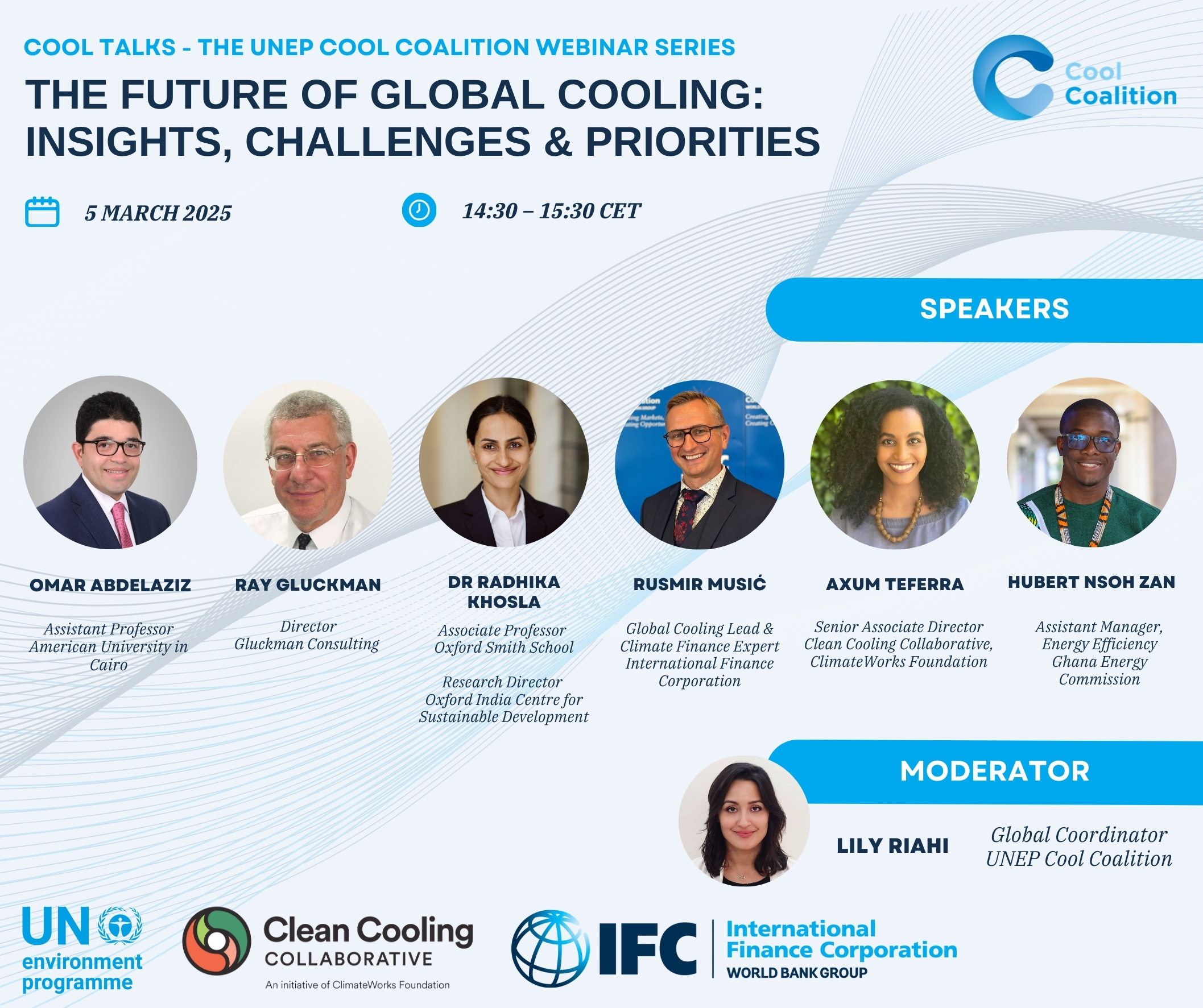
As the world prepares for COP30 and countries finalize their NDCs 3.0, the UNEP Cool Coalition is preparing to release the second Global Cooling Watch report. This webinar will bridge insights from the 2023 edition with the upcoming 2025 report, identifying policy gaps, investment opportunities, and key actions needed to scale sustainable cooling worldwide.