Extreme heat is accelerating across the globe, emerging as one of the deadliest climate risks. But nowhere is it more acute than in cities. Urban areas absorb and retain heat through dense infrastructure, dark surfaces, and waste heat from buildings and vehicles, creating a phenomenon known as the urban heat island effect. In many cities, this can raise local temperatures by up to 7°C compared to surrounding rural areas. As global temperatures rise, this effect is compounding the frequency, intensity, and duration of heatwaves, putting pressure on health systems, infrastructure, and the urban poor, who often lack access to cooling, green space, and resilient housing.
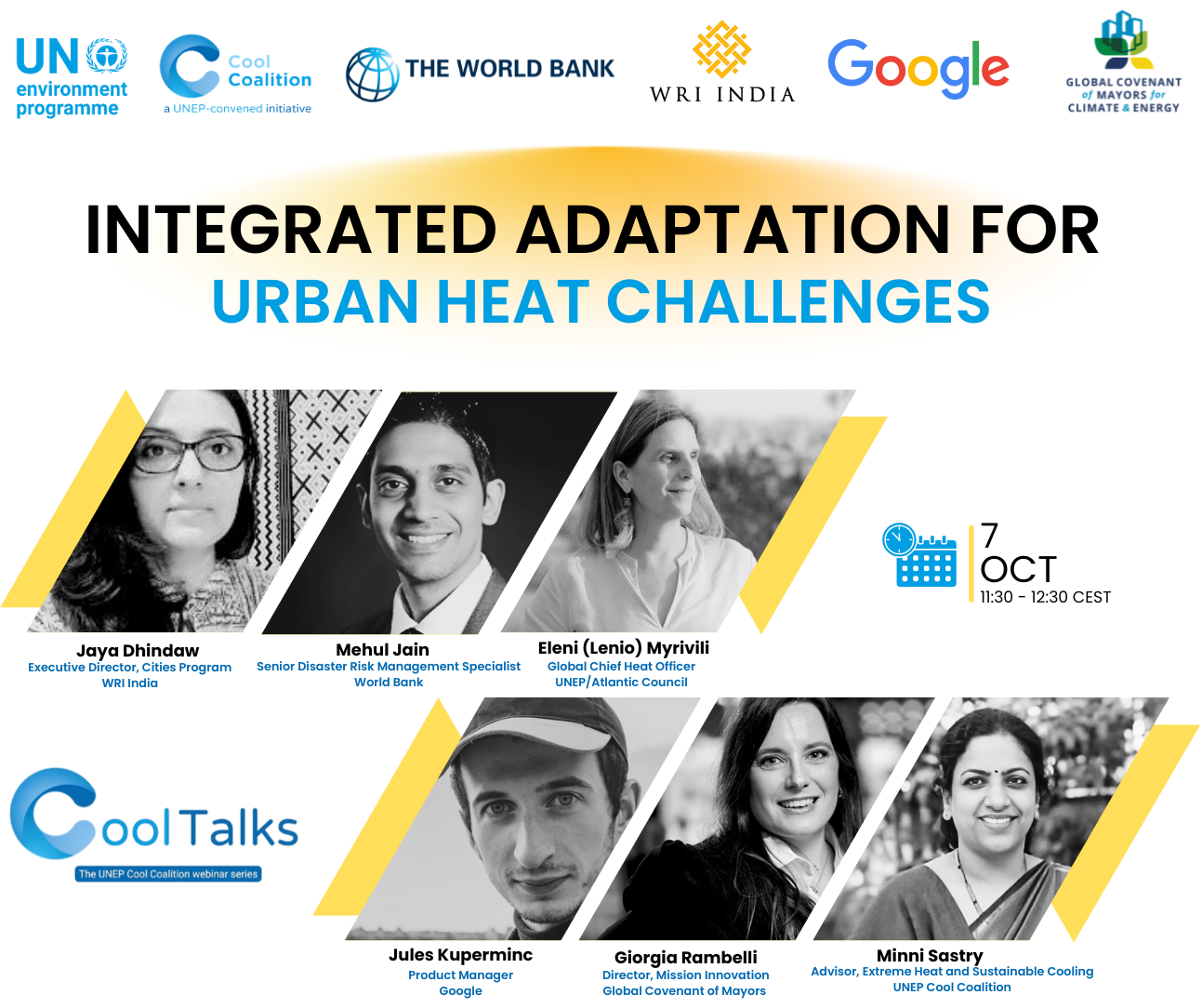
Managing urban heat is central to protecting people, sustaining development gains, and delivering climate resilience. To tackle this growing risk, cities need evidence-based tools, integrated planning, and enabling policy environments that accelerate implementation. This session will spotlight the Handbook for Urban Heat Management in the Global South, a new publication developed by the World Bank, in partnership with the United Nations Human Settlements Programme (UN-Habitat) and the United Nations Environment Programme (UNEP), which offers a practical strategies and real-world examples for understanding and addressing urban heat. The webinar will also situate the handbook within the broader global agenda, exploring how it connects with policy frameworks and emerging initiatives.