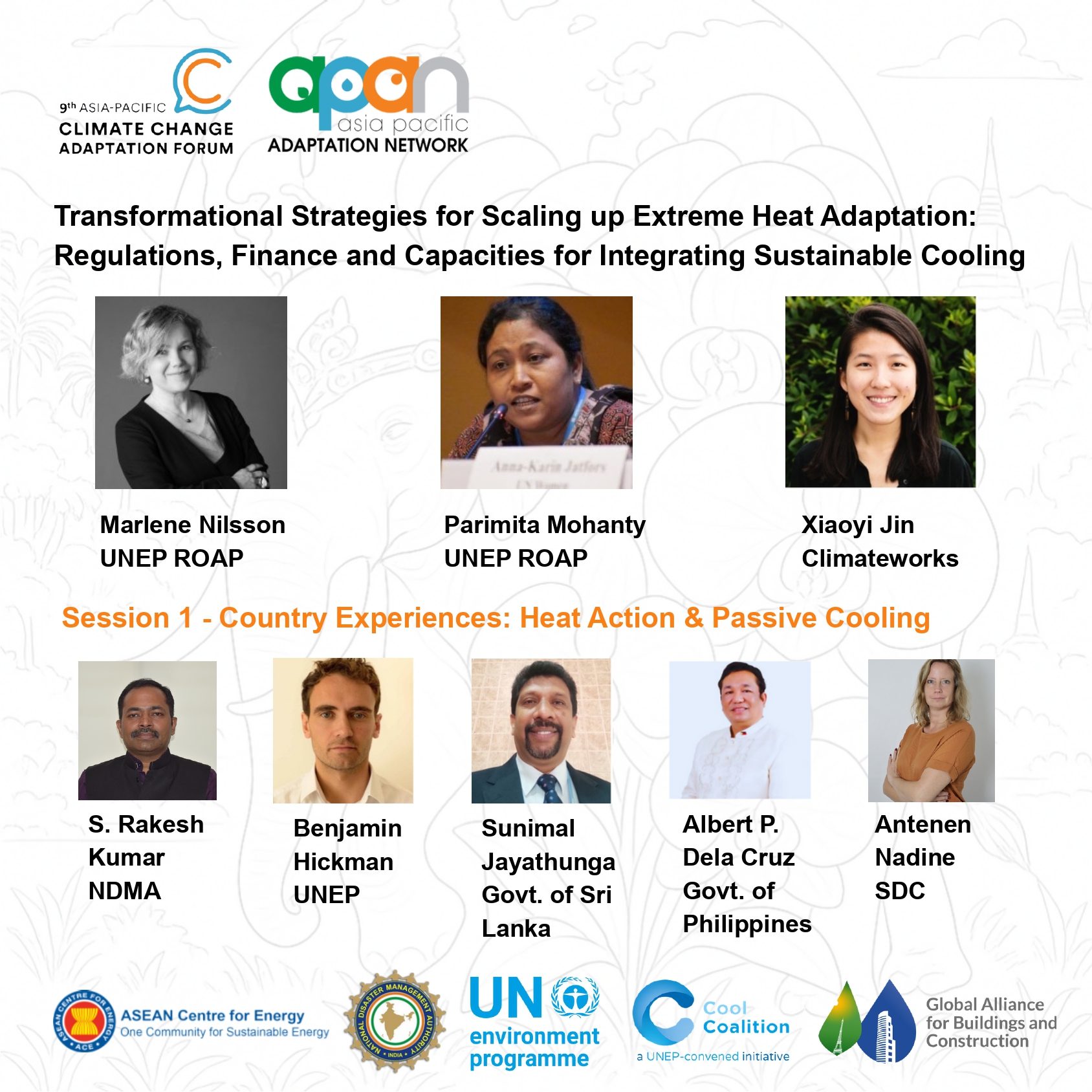
Achieving climate-resilient cooling in Asia–Pacific requires more than technical solutions. Effective governance, cross-sectoral partnerships, and coherent roadmaps are critical to scale passive cooling and heat adaptation strategies. While countries in the region are beginning to mainstream heat resilience into policy frameworks, progress is often fragmented across sectors and institutions, limiting long-term impact.
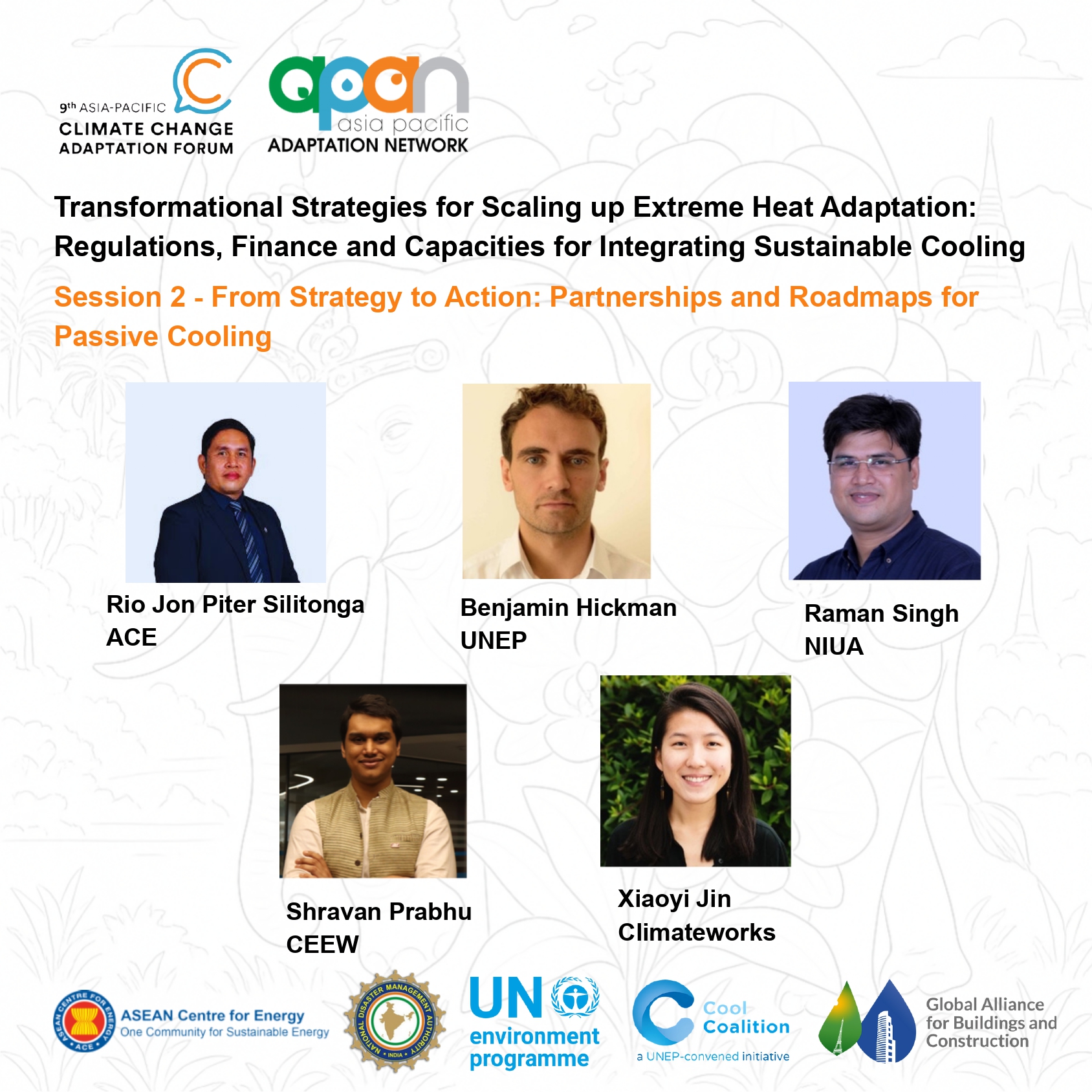
Regional initiatives such as the ASEAN Passive Cooling Strategies (PCS) Roadmap are providing a valuable foundation for aligning approaches across countries. At the same time, organizations like the UNEP Cool Coalition, Climateworks, the World Bank, National Institute of Urban Affairs (NIUA), and CEEW, are working with governments and communities to integrate cooling and resilience into planning, policy, and financing frameworks. These efforts underscore the importance of inclusive, multi-level governance and partnerships in building urban heat resilience that not only reduces risks but also advances equity and sustainable development.
This session will highlight the role of governance and partnerships in moving from pilots to systemic action. It will showcase emerging regional frameworks, explore how cross-institutional coordination is driving the sustainable cooling in India and the region, and discuss how partnerships can support the implementation of passive cooling and heat resilience while promoting equity, gender inclusion, and community resilience.
This side event, convened by the UNEP Cool Coalition, brings together government representatives and sustainable development experts to officially launch the NDC Cooling Guide, and foster high-level dialogue on how sustainable cooling can be embedded in national adaptation strategies.