From heat-resilient cities and district cooling to technology that could reshape the global air-conditioning market, the inaugural Cool Leaders show what leadership on cooling can look like at very different scales. 

One has created a dedicated national office to prepare a densely populated tropical city-state for rising heat. Another has spent decades treating cooling as essential infrastructure in one of the hottest countries on Earth. The third has built a career around pushing air-conditioning technology towards higher efficiency and lower emissions. 

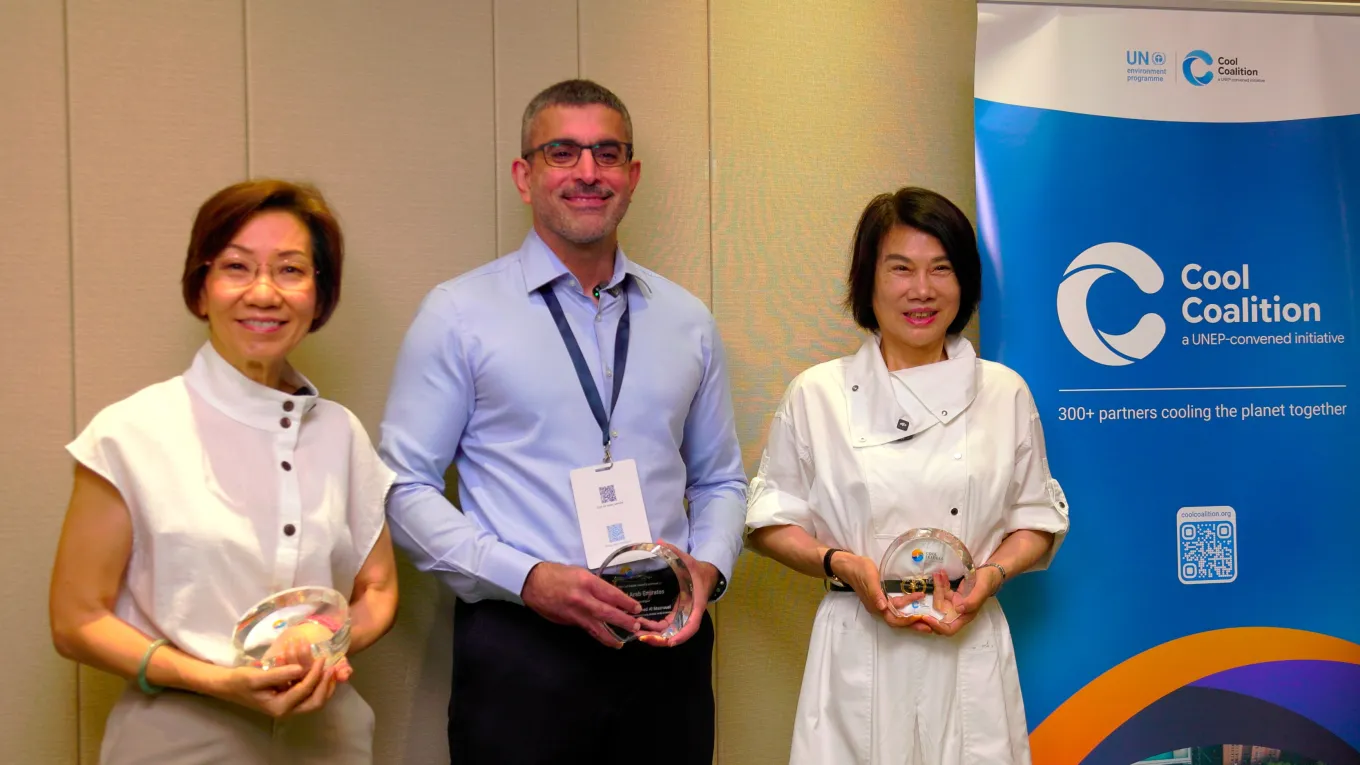
On 17 September, those three very different paths came together as Singapore, the United Arab Emirates (UAE) and Dong Mingzhu, Chairwoman of Gree Electric Appliances, were announced as the inaugural Cool Leaders by the UNEP Cool Coalition. 

The recognition, presented during the first Global Cooling Pledge Assembly, is intended to do more than celebrate past achievement. Cool Leaders serve for one year, using their experience and visibility to engage peers, showcase what implementation looks like and encourage others to act. 

And, as the people who selected them discovered, leadership on cooling can take surprisingly different forms. 
Singapore: preparing a city for a hotter future

For Singapore, sustainable cooling begins with a basic geographic reality: heat and humidity are part of everyday life, and both will intensify as the climate warms. 

The Cool Leaders Evaluation Committee recognised Singapore for bringing heat resilience and sustainable cooling together, including through the establishment of its first dedicated Heat Resilience Policy Office. 

Its approach includes urban planning and passive design, energy efficiency, district cooling and long-term planning for heat resilience. The Committee described Singapore's experience as an example of how cooling can be integrated into infrastructure, cities and national climate action rather than treated as a standalone technology issue.

Image
Cool Leaders

Receiving the recognition, H.E. Grace Fu Hai Yien, Minister for Sustainability and the Environment, placed it in the context of Singapore's 2026 Year of Climate Adaptation. 

“By joining hands, we can build a more heat-resilient future for all,” Fu noted. 

The recognition comes as Singapore is putting that philosophy into institutional form. Its Heat Resilience Policy Office has been established to coordinate heat resilience across government, while the country's broader approach combines building performance, greenery, passive cooling and efficient mechanical cooling. 

UAE: treating cooling as infrastructure

“For the UAE, cooling is an infrastructure issue,” H.E. Eng. Sharif Al Olama, Undersecretary for the Energy and Petroleum Sector at the Ministry of Energy and Infrastructure, told the Assembly, while accepting the recognition on behalf of H.E. Suhail Mohamed Al Mazrouei, Minister of Energy and Infrastructure. 

In the UAE, cooling can account for up to 70 per cent of peak electricity demand during summer. Its response has included district cooling, energy-efficiency policy and long-term infrastructure planning, bringing together technology with regulation, investment and urban development. 

The UAE was also instrumental in taking the cooling issue onto the global political stage when it hosted COP28 in Dubai in 2023 and the Global Cooling Pledge was launched. The Pledge linked two challenges that had too often been approached separately: expanding access to cooling while cutting its climate impact. 

Looking ten years ahead, Al Olama described the ambition in particularly concrete terms: “we moved from pledges to architecture.” His vision is for district cooling, efficient equipment, better buildings and smart energy management to become standard choices in hot, fast-growing economies, rather than corrections made after inefficient systems have already been built. 

Dong Mingzhu: changing the technology itself

The third Cool Leader comes not from government but industry. 

Dong Mingzhu, Chairwoman of Gree Electric Appliances, was recognised individually for a lifetime of leadership and service to innovation and sustainable cooling.  

Her nomination documented work spanning high-efficiency air conditioning, standards and the development and deployment of low-carbon cooling technologies. It highlighted solar-storage-air-conditioning systems that integrate renewable power, storage and cooling, alongside her role in international refrigeration standards and Gree's work on technologies recognised through the Global Cooling Prize

For Dong, the argument for innovation is ultimately about access as well as technology. 

“Through continuous innovation and global collaboration, we can make cooling greener and more accessible for our global communities,” she noted. 

It is a significant dimension of the inaugural cohort. Demand for cooling will continue to grow. The question is therefore not simply whether more cooling equipment will be produced, but what kind of equipment enters the world's homes, businesses and cities. 

Behind the decision: seven people, and plenty of debate

Selecting three examples from a field as broad as sustainable cooling was not straightforward. 

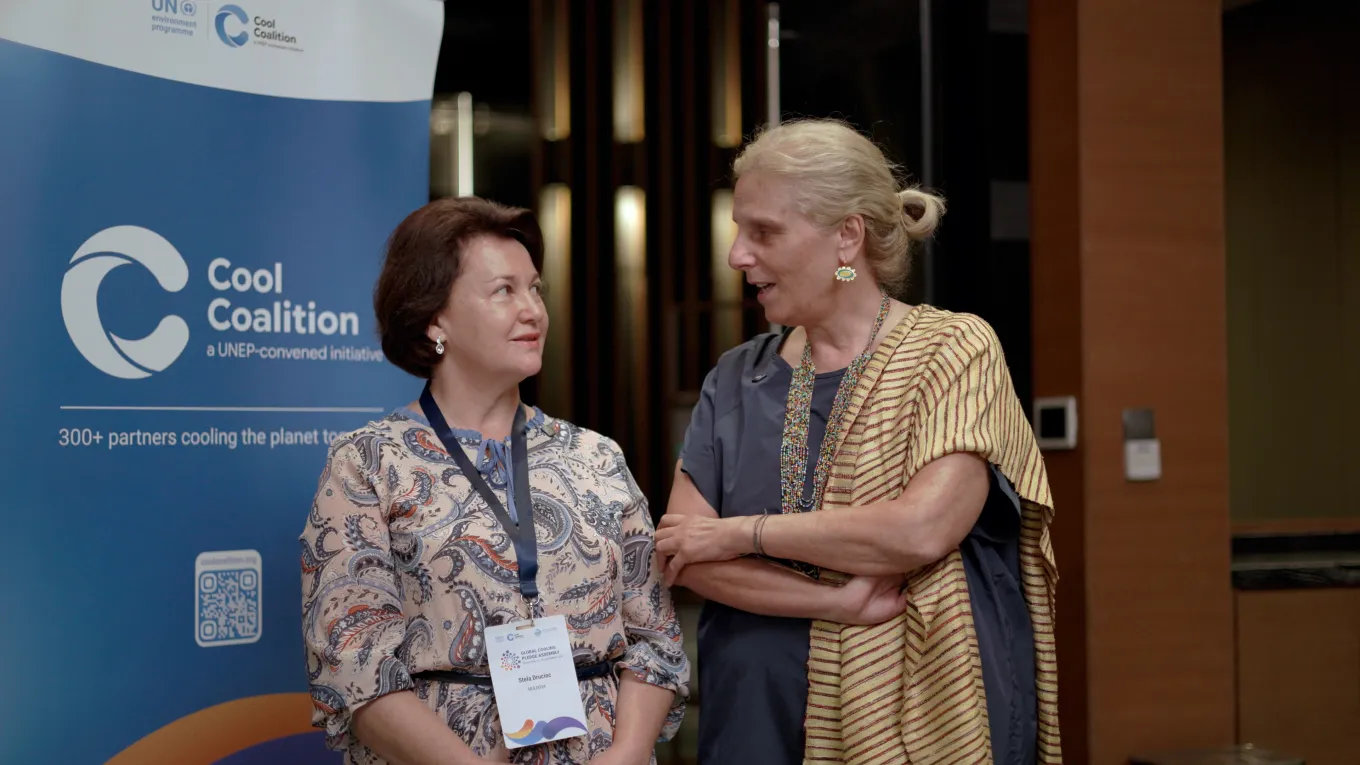
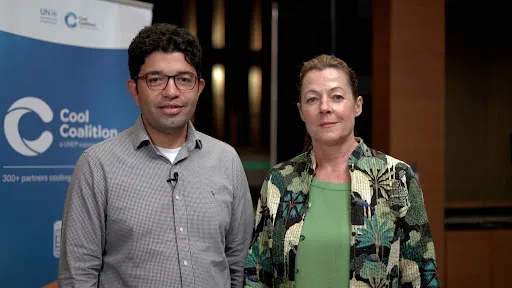
The independent 2026–2027 Evaluation Committee brought together Dr Omar Abdelaziz, Associate Professor of Mechanical Engineering at The American University in Cairo; Stela Drucioc, Head of the Air and Climate Policy Directorate at the Ministry of Environment of the Republic of Moldova; Stephanie Egger Haysmith, Communications and Information Officer at the Montreal Protocol Ozone Secretariat; Ankit Kalanki, Principal at RMI; Dr Radhika Khosla, Associate Professor at the University of Oxford's Smith School of Enterprise and the Environment and Research Director of the Oxford India Centre for Sustainable Development; Dr Eleni “Lenio” Myrivili, Global Chief Heat Officer with UNEP and the Atlantic Council Climate Resilience Center; and Kimberly Roseberry, Economic Affairs Officer in the Energy Division of the UN Economic and Social Commission for Asia and the Pacific. 

Their perspectives were deliberately different, and so were their conclusions along the way.

Image
Cool Leaders Evaluation Committee

Myrivili described the deliberations as particularly interesting because there was genuine disagreement. Committee members challenged each other's assumptions and, she reflected, learned from one another in the process. The final selection was therefore not simply the mechanical result of a scorecard, but the product of discussion about what leadership actually means in a field spanning public health, technology, cities, energy and climate.

The process also became personal. For Drucioc, exposure to the nominees' work prompted an unexpected response much closer to home: it inspired her to consider adding renewable energy to her own house. It was a small example of the idea at the centre of Cool Leaders. Leadership can influence a national policy, a billion-dollar infrastructure decision or a household choice.  

Egger Haysmith came away from the process struck by the sheer number of people already working to advance sustainable cooling, often in very different places and without much global visibility. The nominations revealed a wider community of engineers, public officials, businesses, cities and practitioners whose work rarely appears together under one banner. 

With cooling engineer Omar Abdelaziz among its members, the assessment went far beyond visibility or ambition. Government candidates were examined across 11 areas, ranging from cooling access, efficiency and cold chains to finance, refrigerants, passive design, renewable energy, standards and urban heat resilience. Individual nominees were examined for leadership, demonstrated results, innovation, scalability, influence and their contribution to sustainable cooling overall. 

A wider field of leadership

Three additional nominees were recognised as runners-up, reflecting how much strong work emerged through the inaugural process. 

In San Antonio, United States, the Cool Neighborhoods Initiative is taking the fight against heat down to individual neighbourhoods. Heat-vulnerability mapping helps direct investment, while cool roofs, reflective pavement, weatherisation, additional shade, trees and local monitoring are being deployed in communities facing particularly high heat exposure. 

In Kenya, cooling intersects directly with livelihoods and food security. The country's work includes urban greening, clean energy and efficiency measures, alongside an eco-cooling facility in Kiptororo Ward that helps farmers preserve potatoes and reduce post-harvest losses. 

And in France, Gérald Cavalier, President of the Association Française du Froid, has spent years working through the refrigeration profession itself. Among the initiatives highlighted was CLIM'ECO, which trains cooling professionals and works with users in French overseas territories to reduce air-conditioning energy demand through better installation, maintenance and everyday practice. 

The three runners-up broaden the picture further. Leadership can come from a global company, but also from a refrigeration professional. It can take the form of national policy, but also a cool roof, a potato cold room or a tree planted on a dangerously hot street. 

Making leadership contagious

The idea behind Cool Leaders stretches back to June 2025, when the Global Cooling Pledge Focal Points agreed the concept for a formal recognition initiative. Its Terms of Reference were endorsed at the Second Cooling Ministerial at COP30 in November 2025, and the seven-member independent Evaluation Committee was announced the following month. 

From January to March 2026, Pledge signatories voted on government nominations while the public voted on the individual category. The Committee then reviewed nominations and deliberated through April and May. The inaugural honourees were confirmed in June, ahead of their public recognition at the Global Cooling Pledge Assembly in Singapore.

The first cycle has already generated lessons for the next one. For 2027–2028, the framework is set to broaden to four areas: national government, subnational government, industry, and civil society, academia and youth.

Image
Cool Leaders Evaluation Committee

But the more immediate experiment begins with the first three Cool Leaders themselves. Over the coming year, Singapore, the UAE and Madam Dong will be expected to share what they have learned, engage other decision-makers and help make sustainable cooling visible not simply as a climate challenge, but as an area in which choices being made now can change what happens next. That may mean influencing the design of an entire city, a new generation of cooling technology or the energy system of a single home.