London Climate Action Week 2026 unfolded in a city already testing the limits of heat preparedness. As temperatures climbed, the Mayor of London launched Heat Ready London, the capital’s first heat plan, with 37 priority actions spanning cooling spaces, drinking water, housing retrofits, trees and green spaces, blue spaces, health and care systems, and transport resilience.

The setting gave the week its edge as extreme heat became the condition in which the agenda was being debated.

For the UNEP Cool Coalition, that condition turned the week into a live demonstration of how heat, cooling, buildings and electrification are converging into a single delivery challenge. Extreme heat is an adaptation crisis, affecting health, productivity, housing, infrastructure and essential services. Cooling is also a mitigation challenge. Met through inefficient equipment, poor design and unmanaged peak loads, the response to heat adds pressure to power systems and drives emissions. That tension ran through the Cool Coalition’s engagements across the week.
Electrification and the demand question

At the Global Energy Transition and Electrification Summit, UNEP and the International Renewable Energy Agency (IRENA) announced an upcoming global demand-flexibility programme to help developing countries unlock flexible demand across buildings, cooling, electric vehicles and industry. The announcement followed the UN Secretary-General’s energy transition address, which placed the climate crisis, the energy crisis and rising electricity demand inside one frame.

Heatwaves drive electricity demand when systems are already stretched. Flexible and efficient cooling can help shave peaks, integrate renewables and strengthen energy security, making cooling one of the critical demand sectors for flexibility.

UNEP and IRENA had already begun advancing this agenda earlier in the year through the Action Hub on Demand-Side Flexibility. The Hub is developing the evidence base, convening implementation partners and advancing the shift from treating demand as a passive load to managing it as a resource for cleaner, more resilient power systems.

Cooling moves into buildings, finance and adaptation

The demand question becomes physical in buildings, where design choices determine how much cooling is needed, when it is needed and how much pressure it places on the grid. For the Cool Coalition, buildings are one of the places where sustainable cooling becomes measurable, investable and urgent.

Earlier in the week, Lily Riahi, Head of UNEP’s Buildings and Cooling Unit, moderated a GlobalABC roundtable, convened with support from the COP30 and COP31 Presidencies, as well as and the Climate Champions Team. The discussion focused on how the buildings and construction agenda can move from separate initiatives into a coordinated implementation pathway linking resilience, decarbonisation, cooling, electrification, circularity and finance. Riahi noted how cooling is shaped by building design, construction choices, infrastructure systems and investment decisions that can either lock in demand or reduce it before mechanical cooling is needed.

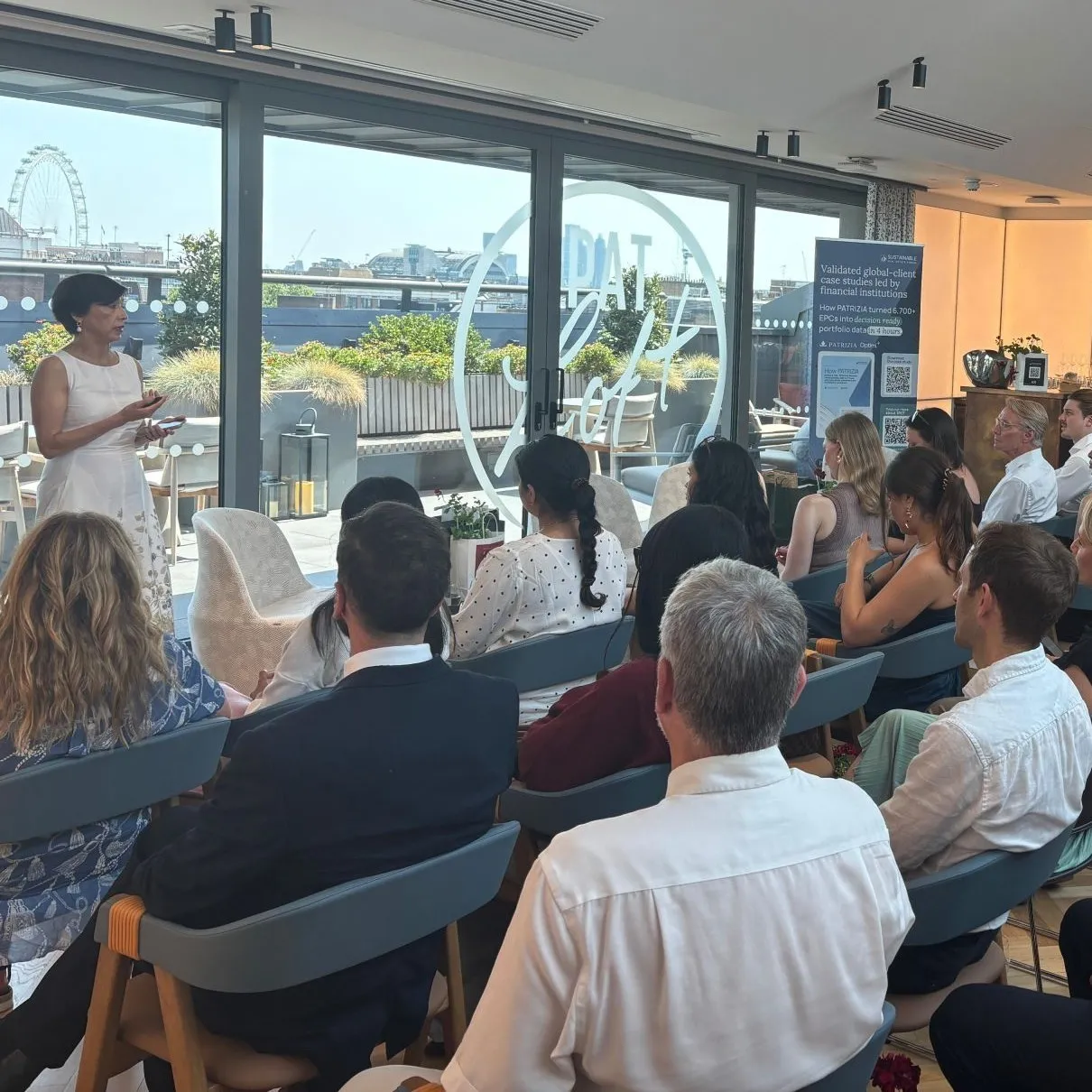
At the Sustainable Real Estate Forum hosted by PATRIZIA, Gulnara Roll, Head of UNEP’s Sectoral Transition Section, framed cooling as an underpriced risk in real estate portfolios. As cooling demand grows, it increasingly shapes operating costs, grid exposure, occupant expectations and asset value, and is beginning to enter due diligence, underwriting, valuation and portfolio strategy.

For cities, the same risk shows up in homes, schools, workplaces and public spaces. Poor design locks in higher cooling demand. On the other hand, passive cooling, efficient equipment, heat-resilient retrofits and urban planning can cut avoidable demand before mechanical cooling is needed, while improving comfort and safety.

Lily Riahi carried this sequence into an Arup-convened event on the cost benefits of adaptation, arguing that cities must reduce avoidable cooling demand first through passive design, urban greening, efficient buildings and heat planning, before meeting what remains efficiently and sustainably. She referenced modelling from Global Cooling Watch 2025 showing that a sustainable cooling pathway can cut cooling-related emissions by 60% by 2050, extend cooling access to 3.5 billion people and save consumers around USD 1 trillion a year. Passive measures alone can lower indoor temperatures by up to 8°C. 

Image
patr

From conference rooms to streets

The week’s heat agenda was not confined to panels and partner meetings. UNEP Chief Heat Advisor Eleni Myrivili spoke to BBC News about Europe’s new reality, warning that cities have been built to trap heat rather than manage it. The interview brought the technical debate back to the daily experience of residents living in homes and neighbourhoods not designed for the temperatures they now face.

That is the gap Beat the Heat is built to close. During the week, the Cool Coalition convened the Beat the Heat Partner Meeting, bringing together partners from the COP30 Brazil and COP31 Türkiye action agendas, cities, implementation organisations and the private sector. The meeting reviewed progress across more than 250 cities now in the implementation drive. 

Beat the Heat helps translate the Global Cooling Pledge commitments into local action, supporting cities to assess heat risks, develop heat action plans, deploy passive and nature-based cooling, use public procurement to shift markets toward efficient, low-GWP technologies, and integrate heat resilience into buildings and planning.

Adalberto Maluf, Brazil’s National Secretary for Urban Environment, brought the discussion back to delivery, noting that without implementation mechanisms, pledges remain political signals. In that spirit, Beat the Heat reflects the Brazilian idea of mutirão, collective work that no one can do alone.

The next test is scale

London showed how quickly the cooling agenda is becoming operational. It is now part of energy planning, building design, infrastructure finance and public health preparedness.

The next step is delivery at scale. The Cool Coalition now looks ahead to the High-Level Financing Forum in New York and the Global Cooling Pledge Assembly in Singapore, where governments and non-state actors will work to turn sustainable cooling, heat resilience and demand flexibility into financed implementation.

More information on the Cool Coalition’s engagements during the London Climate Action Week 2026 is available here.