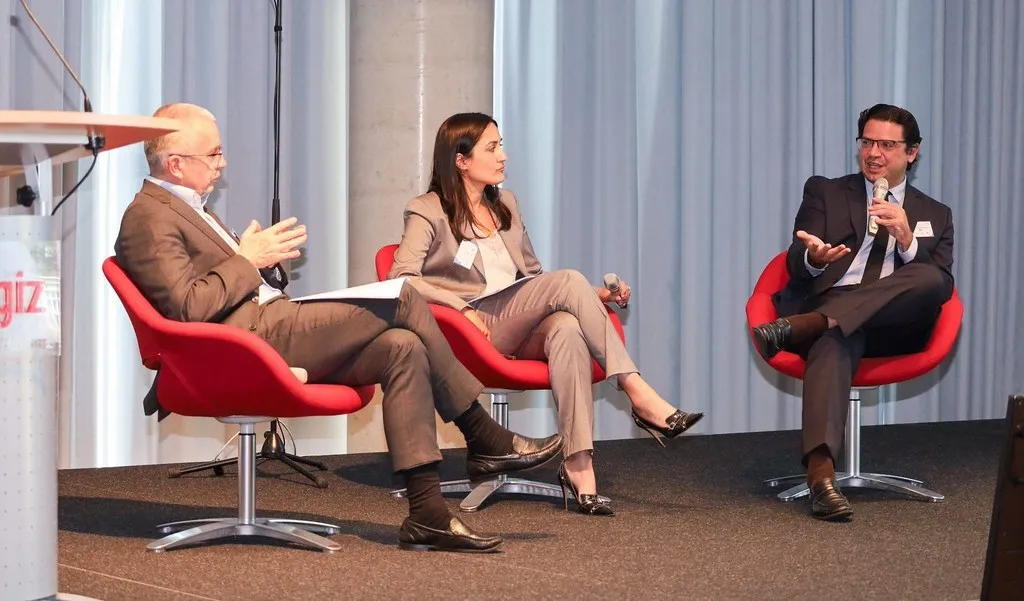
The first Global Cooling Pledge Assembly will convene in Singapore from 15 to 18 September 2026, bringing together signatory countries, cities, industry leaders, development finance institutions and technical partners to accelerate delivery on sustainable cooling. The Assembly marks a significant evolution from last year's inaugural Global Cooling Pledge Signatories Focal Points Meeting in Bonn, expanding from a two-day technical exchange into a four-day, multi-stakeholder platform dedicated to translating commitments into action. 

The story behind

As global temperatures rise, cooling demand could more than triple before 2050, consequently driving up GHG emissions. To address this challenge, the Global Cooling Pledge  was launched at the 2023 UN Climate Change Conference (COP28), as the world’s first collective commitment to cut cooling-related emissions by 68% by 2050, while rapidly expanding access to sustainable cooling. The first Global Cooling Pledge Signatories Focal Points Meeting was convened in June 2025 to anchor the implementation phase. Co-hosted by Germany, Italy, and the United Arab Emirates (UAE), and co-chaired by Brazil and the UAE, the meeting provided an initial platform for national and subnational signatories to exchange experiences, explore practical implementation pathways, and identify shared challenges and opportunities.  

A four-day journey

The Assembly’s first day will focus on identifying priorities through Regional Dialogues, and on exchanging experiences that advance implementation. On day two, the focus shifts from identifying needs to strengthening practical solutions and pathways to scale driven by the Implementation Roundtables and Beat the Heat Training Sessions.  Day three and four will be dedicated to the first formal gathering of members of the Intergovernmental Committee on Cooling (IGCC), who will convene to advance the Pledge's 2030 Implementation Strategy, and set the path from Singapore towards COP31.

Throughout the Assembly participants will also engage with key implementation mechanisms – including EPIC Facility, country dialogues, Beat the Heat Implementation Drive and the Manufacturing Platform – and leadership will be recognized through the Cool Leaders initiative. 

"Singapore is where signatories turn the commitments endorsed at Belém into coordinated delivery, bridging COP30 and COP31, with the IGCC’s first formal gathering at its centre," remarked Lily Riahi, Head of UNEP's Buildings and Cooling Unit.  

Image
Focal Points Meeting

From Singapore to UAE and Brazil: insights shaping the Assembly

Image
Singapore

With daily mean temperatures at 27.9°C and projected to rise by up to 5.0°C by the end of this century, Singapore faces high year-round cooling demand compared to most other countries. “As a tropical city‑state where daily heat and humidity demands the integration of cooling into our adaptation efforts, hosting this Assembly reflects our commitment to the cooling agenda while allowing us to share our practical experience in scaling sustainable cooling strategies and strengthening community heat resilience”, Calvin Chong, Divisional Director of the Energy & Climate Policy Division at Singapore’s Ministry of Sustainability and the Environment, explained.

As part of the Assembly, participants will take part in Beat the Heat study tours, which include site visits that showcase Singapore’s approach to heat management and climate-resilient urban development. These visits will provide an opportunity to explore the city’s experience in heat governance and climate-resilient urban development while strengthening peer learning and collaboration across the Beat the Heat community. 

Facing similar extreme heat conditions, the UAE has already placed cooling at the center of its climate and development agenda, investing in advanced district cooling systems and implementing high‑efficiency building standards. Dr. Mozah Al Nuiami, Director of Productivity and Demand Management Department at the UAE Ministry of Energy and Infrastructure, explained that “As the UAE hands over the co-Chair role, we remain fully committed to the implementation phase of the Global Cooling Pledge — building on the momentum created since COP28 and working closely with partners to accelerate practical, scalable and measurable cooling solutions worldwide.” Al Nuiami also emphasised that cooperation through the Global Cooling Pledge is fundamental to both climate mitigation and adaptation.   

Brazil, another signatory to the Pledge, looks ahead to four days dedicated to strengthening sustainable cooling implementation, especially at the subnational level. “At COP30, we reaffirmed our support for urban action through the launch of the Beat the Heat Implementation Drive, which we will now build on to deliver the pledge at city level,” remarked Adalberto Maluf, Brazil’s Vice Minister for Environment and Climate Change, and the co-Chair of the Global Cooling Pledge.  

Toward coordinated action

The Global Cooling Pledge Assembly is where the Pledge signatories will take a pivotal step in operationalising cooling within the global climate agenda. By bringing together a wide range of actors in a single forum and focusing on delivery at scale, the Assembly aims to transform shared ambition into coordinated action, while positioning sustainable cooling as a cornerstone of climate resilience. Anticipated outcomes include advancing the Pledge’s 2030 Implementation Strategy, the first formal convening of the IGCC, expanded technical support through the EPIC Facility, and strengthened cooperation among signatories and finance partners. 

Discover more here.