Extreme heat is reshaping how cities operate. It strains health systems, drives up energy demand and exposes vulnerable residents to conditions their buildings and infrastructure were never designed for. At the same time, more granular temperature data is creating new possibilities for how cities, infrastructure operators and other decision-makers anticipate and respond to temperature risk.
FortyGuard Hackathon'26 brought together nearly 4,000 participants across 842 teams from more than 50 countries and six continents. Thirteen projects were shortlisted and three winners selected. Judges assessed submissions on impact and relevance, technical execution, innovation and communication.
The winning projects apply temperature intelligence to very different challenges, from prioritising urban cooling investments to reducing mechanical cooling in data centres and protecting crops from frost. The results are prototypes and modelled applications rather than demonstrated impacts at scale. But they illustrate how temperature data can increasingly be translated into practical decisions.
For cities developing heat action plans or directing limited adaptation funding, the prototype illustrates how heat data, building information and cost analysis could be brought together to support more targeted decisions.
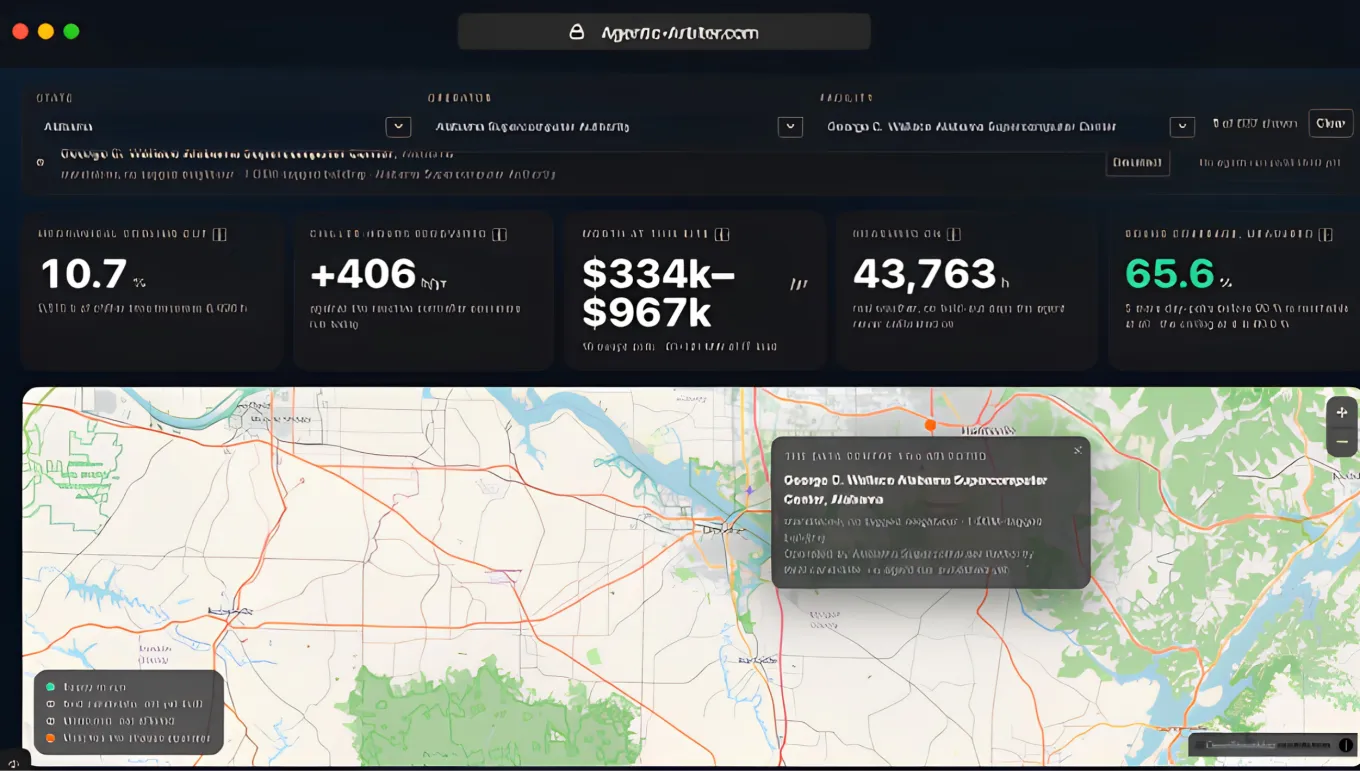
Agentic-Arbiter cuts data-centre cooling when outside air can do the work
The second-place project addresses another growing urban infrastructure challenge: data-centre cooling.
Agentic-Arbiter, developed by Bismah Javed, uses FortyGuard's two-metre air-temperature forecast to generate hour-by-hour schedules identifying when a data centre could safely use outside air instead of relying entirely on mechanical cooling.
The system adjusts its safety margin based on previous forecast errors and accounts for site geometry. Where conditions make free cooling unsuitable, it declines the hour rather than recommend an unsafe operating window. The tool was tested across 238 real data-centre campuses in 36 US states and reports its own gaps in coverage.
As cities host growing digital infrastructure, data centres can add significant electricity and water demand. Reducing unnecessary mechanical cooling could help ease grid pressure during periods of high demand while improving infrastructure efficiency.
From temperature data to local action
The three winning projects address different problems but follow a similar logic: combine granular temperature information with the physical and economic characteristics of a particular system, and turn that information into something decision-makers can act on.
That transition, from understanding temperature risk to acting on it, is where the gap lies for many cities today. Heat action plans exist and temperature data is increasingly available. What is often missing is the layer in between, with tools specific enough to tell a planner which building to prioritise, an operator when to switch systems, or a procurement officer where to direct limited funding.
It is also the transition at the heart of Beat the Heat, the flagship implementation drive of the COP30 Presidency and the UNEP Cool Coalition. Launched in 2025, Beat the Heat works to accelerate local action on extreme heat and sustainable cooling and to translate the Global Cooling Pledge into implementation at city and regional level. Its areas of action include urban heat assessments and planning, nature-based and passive cooling, sustainable procurement and the integration of cooling measures into building codes and urban policy. Tools such as those developed through the hackathon could help strengthen that ecosystem by giving cities more precise ways to identify risks, prioritise interventions and direct investment.
"Every building, farm and city should be able to anticipate temperature and act on it," says Jay Sadiq, Founder and CEO of FortyGuard. "This hackathon showed how many different things people can build with the same intelligence. Our ambition is to make temperature part of how the world designs infrastructure, operates machines and invests in its future."