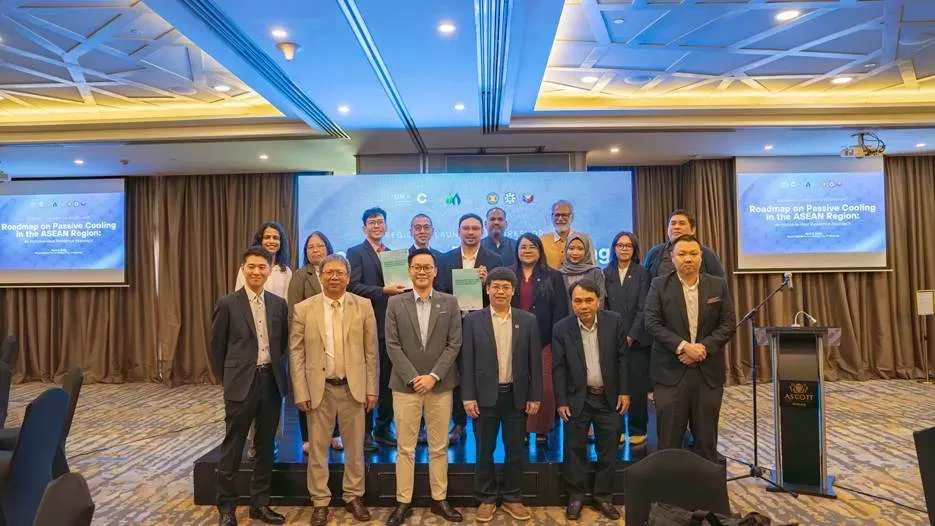
The ASEAN Centre for Energy (ACE) and the United Nations Environment Programme (UNEP) through the Cool Coalition and EmPower, have officially launched the Roadmap for Extreme Heat Protection through Passive Cooling in ASEAN Region to address rising heat risks and their growing impacts across the region. The publication release was commemorated through a launching event held in partnership with the Department of Energy of the Philippines in Manila, on 7 April 2026.
Driven by rapid urbanisation, ASEAN could face up to 120 days per year with temperatures above 35°C by 2050, posing significant risks to human health, energy security, economic productivity, and climate resilience. In response, the roadmap was developed to promote passive cooling strategies, such as natural ventilation, reflective roofs, and high-performance building envelopes, grounded in a "Passive First" design philosophy that prioritises reducing cooling demand before applying active cooling solutions. According to the roadmap, this approach represents a practical and transformative pathway that can deliver cooling energy savings of 20 to 50%.
A multi-stage methodology combining desk research, surveys, stakeholder mapping, and regional consultation workshops was used to develop the analysis of the roadmap. Findings from the survey indicate a noticeable gap between interest and implementation of passive cooling strategies amongst ASEAN Member States (AMS), highlighting the need to address high up-front costs, limited technical capacity, insufficient awareness of available funding and incentive mechanisms, and perceived low returns on investment, in order to accelerate adoption.
The roadmap also presents key recommendations. It covers the need to align passive cooling strategies with regional documents, such as the ASEAN Plan of Action for Energy Cooperation (APAEC) 2026-2030 and the Nationally Determined Contributions (NDCs), incorporation of mandatory passive cooling requirements into national building codes, and more.
The launching event was attended by members of ASEAN Passive Cooling Advisory Group, members of ASEAN EE&C-SSN Working Group on Building, and the stakeholder partners in implementing passive cooling strategies, including building designers, developers, and financing institutions.