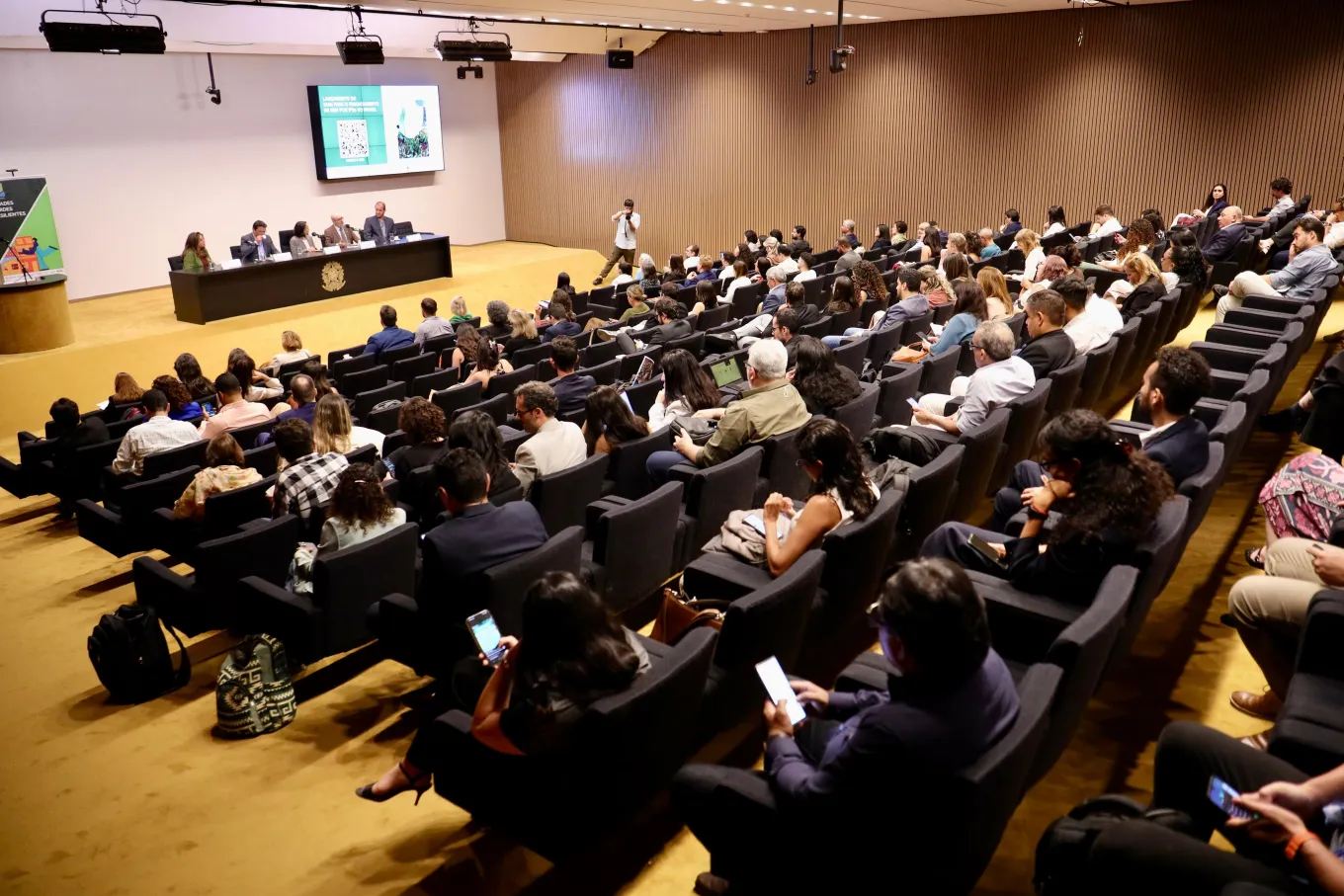
Brazil is turning national climate priorities into practical city action on extreme heat. At the 3rd National Meeting of the Green and Resilient Cities Programme, held in Brasília on 7 and 8 May 2026, federal ministries, municipalities, development banks, research institutions, civil society and international partners came together around a growing urban challenge: how to help cities prepare for more frequent and intense heat while expanding nature-based solutions, passive cooling and climate resilience.

The meeting was carried out by Brazil’s Ministry of Environment and Climate Change, the Ministry of Cities, the Ministry of Science, Technology and Innovation, the COP30 Presidency and UNEP, with support from 41 organizations, including many Beat the Heat partners. It gathered 781 registered participants, 506 of them in person, with representatives from 45 cities, including 28 cities under Beat the Heat. Senior leadership took part, including the Minister and Vice-Minister of Environment and Climate Change, João Paulo Capobianco and Adalberto Maluf, alongside scientific experts including Carlos Nobre and Mila Montezuma.
National plans meet city delivery

The meeting built on Brazil’s Green and Resilient Cities Programme as a national platform for local implementation. Discussions connected Beat the Heat, the National Climate Plan and the National Cooling Action Plan with federal initiatives including the National Strategy for Nature-based Solutions, the National Urban Afforestation Plan, the Urban Environmental Registry and AdaptaCidades, which covers 581 highly climate-vulnerable municipalities.

The agenda was shaped by a UNEP diagnostic survey of 53 Brazilian municipalities, which found that extreme heat is rising on local agendas, but cities still face gaps in data, technical capacity, planning instruments, implementation pathways and access to finance. In response, the Beat the Heat contribution was built around four priorities identified by cities themselves: data and technical support, local heat action planning, nature-based and passive cooling solutions, and financing opportunities.

The data discussions introduced tools to help cities understand where heat risks are most severe and who is most exposed, including the launch of MapBiomas’ new urban heat island module. Planning discussions focused on how cities can integrate heat into adaptation plans, master plans, risk assessments and sectoral policies, with examples from Rio Grande do Sul, Campinas, Salvador and Florianópolis.

Nature-based and passive cooling solutions were central to the exchange, with examples from São Paulo, Teresina, Belém, Belo Horizonte and Contagem, showing how school naturalization, urban afforestation, community interventions and green infrastructure can reduce heat while strengthening resilience, especially in vulnerable areas.

Financing was another major focus. Caixa Econômica Federal, BNDES, AFD, CCFLA Brasil Hub and Banco do Brasil joined discussions on how municipalities can develop bankable projects and access climate finance. Participants highlighted the need to strengthen local technical capacity so cities with different fiscal and institutional realities can move from plans to investable projects.

A collaborative model for implementation

The meeting helped consolidate Beat the Heat as a platform for municipal engagement, technical exchange and implementation-focused capacity building in Brazil. It also reinforced the role of the National Cooling Action Plan in connecting sustainable cooling with urban adaptation, public health, nature-based solutions and climate finance.

Key outcomes included four thematic capacity-building sessions developed from UNEP’s city diagnostic, stronger engagement with development banks and financing institutions, and the presentation of new technical and financial tools for cities, including MapBiomas’ urban heat island module and the R$19 million ArborizaCidades public call. 

A notable feature was the collaborative “mutirão” model behind the meeting, which brought Brazilian institutions, UNEP and 15 Beat the Heat partner organizations together around shared technical priorities and municipal implementation needs. 

Image
Imagem

Next steps for Brazil’s urban heat agenda

The Brasília meeting showed strong municipal demand for support on extreme heat, especially around data, local heat action plans, nature-based and passive cooling solutions, and access to finance. It also showed how an existing national platform can help translate global initiatives into local delivery.

By anchoring Beat the Heat within the Green and Resilient Cities Programme, Brazil created a practical model for connecting federal policy, municipal needs and partner expertise. The next priorities are focused on expanding technical assistance to cities, supporting local heat action plans, deepening partnerships with development banks, improving access to climate and territorial data, and widening financing opportunities for municipalities with different capacities. These next steps will determine how Brazil’s urban heat agenda moves from coordination to delivery.