Showing 759 results
News
Brazil’s Blueprint for Sustainable Construction at COP30

News
UNEP Partners with Department of Horticulture, Government of Haryana to Scale up Sustainable Cold Chains in Horticulture Sector

News
Cold Chains Move to Centre Stage in the Race for Food Security, Public Health and Climate Resilience

News
Viet Nam’s Urban Cooling Milestone

News
Advancing Cooling Commitments at CEM16

Publication
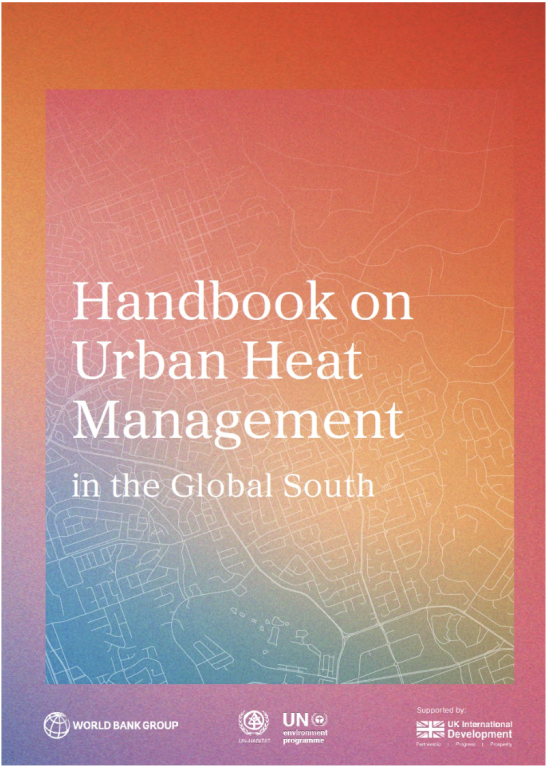
Handbook for Urban Heat Management in the Global South
Extreme heat is reshaping life in cities. For millions of people, especially in fast-growing urban areas of the Global South, higher temperatures are making it harder to earn a living, attend school, access healthcare, or move safely throughout the day. Extreme urban heat and lack of sustainable cooling is threatening productivity, deepening inequality, and increasing the risk of displacement when communities can no longer cope. Cities cannot afford to treat extreme heat as a seasonal inconvenience. Without action, heat will erode livelihoods and overwhelm urban infrastructure and services. It will fuel unemployment, drive internal and cross-border migration, and put massive demands on energy systems. Cities must act now to manage rising temperatures before it is too late. The Handbook on Urban Heat Management in the Global South, developed by the World Bank in partnership with the United Nations Human Settlements Programme (UN-Habitat) and the United Nations Environment Programme (UNEP), offers a practical response. It brings together real examples and strategies from cities that are already tackling extreme heat. It focuses on powerful solutions that are feasible, affordable, and easy to adapt - especially those that expand access to accessible, sustainable cooling.
News
Building Momentum Around COP30 Pavilion Themes

News
UNGA80: UNEP and COP30 Presidency Open Global Call for Beat the Heat
Page
Homepage
News
Scaling Passive Cooling and Heat Resilience in Asia–Pacific