Showing 759 results
Resource
50 Cities at 50°C - Snapshot 2
Show more
Resource
Agenda
Show more
Resource
Presentations
Show moreGlobal Cooling Pledge Progress Report 2025
This second Global Cooling Pledge Progress Report provides a comprehensive overview of how countries are translating commitments into action across policy, planning, and implementation. It highlights progress in advancing access to sustainable cooling, improving energy efficiency, and accelerating the uptake of climate-friendly technologies, while also identifying key gaps in finance, data, and delivery. Drawing on country submissions and sectoral insights, the report reflects growing momentum and stronger alignment between national strategies and on-the-ground implementation. It also outlines priority areas for coordinated support, positioning the Global Cooling Pledge as a central platform to drive systemic, equitable, and scalable cooling solutions.
News
Cooling Beyond Cities: Scaling Rural Space Cooling and Thermal Comfort
Resource
Global Cooling Pledge Progress Report 2025
This second Global Cooling Pledge Progress Report provides a comprehensive overview of how countries are translating commitments into action across policy, planning, and implementation. It highlights progress in advancing access to sustainable cooling, improving energy efficiency, and accelerating the uptake of climate-friendly technologies, while also identifying key gaps in finance, data, and delivery. Drawing on country submissions and sectoral insights, the report reflects growing momentum and stronger alignment between national strategies and on-the-ground implementation. It also outlines priority areas for coordinated support, positioning the Global Cooling Pledge as a central platform to drive systemic, equitable, and scalable cooling solutions.
Page
50 @ 50

Resource
Global Cooling Pledge Progress Report 2025
Show more
News
ACE and UNEP Launch Passive Cooling Roadmap to Protect Communities and Cities from Rising Heat Risks in ASEAN
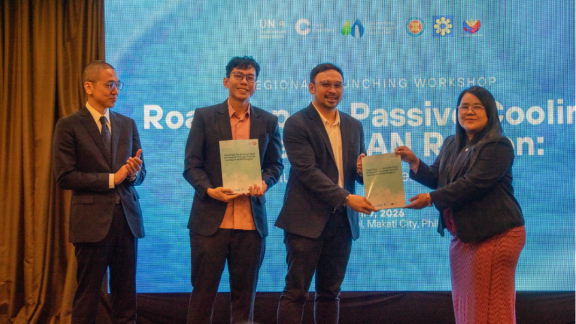
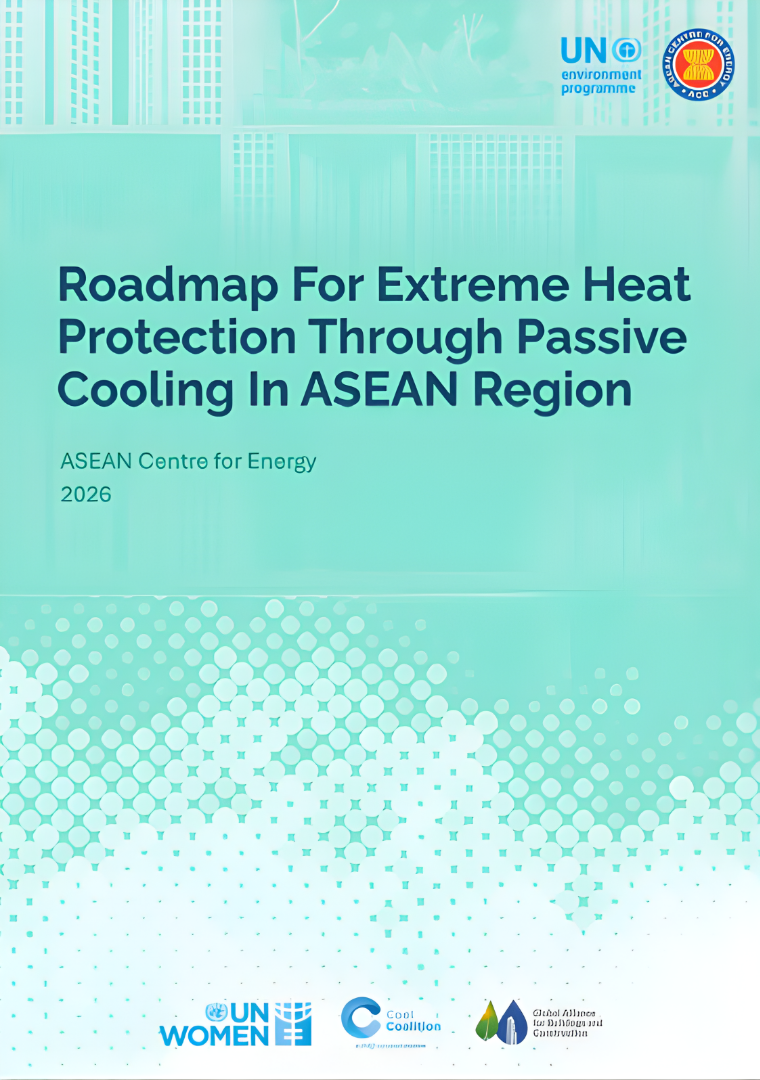
Roadmap for Extreme Heat Protection Through Passive Cooling in ASEAN Region
The Roadmap for Extreme Heat Protection through Passive Cooling in the ASEAN Region, developed by the ASEAN Centre for Energy and the United Nations Environment Programme through the Cool Coalition and EmPower, sets out a regional framework to address rising heat risks driven by rapid urbanisation, climate change and growing energy demand. It positions passive cooling as the first line of response, prioritising building design, materials and nature-based solutions to reduce cooling needs before mechanical systems are introduced. Combining policy, finance and technical recommendations, the roadmap highlights a critical gap between interest and implementation, and provides actionable pathways for ASEAN Member States to strengthen resilience, reduce energy demand and protect vulnerable populations.